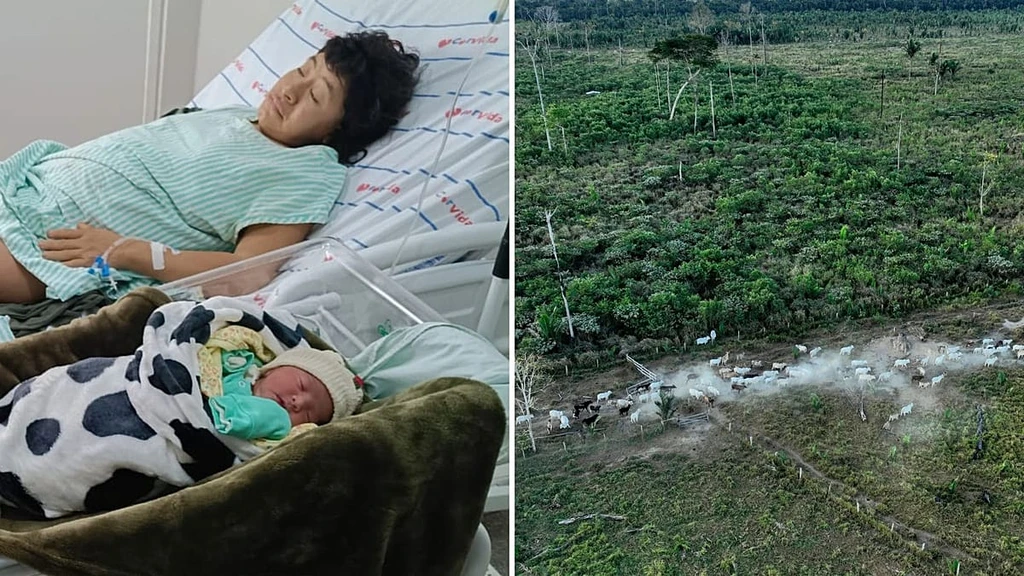
The Akuntsu, an Indigenous people of the Amazon rainforest, faced extinction with only three surviving members: Pugapia and her daughters Aiga and Babawru. Their lineage was expected to end without an heir.
However, in December, Babawru, in her 40s, gave birth to a son, Akyp. This birth offers a beacon of hope for the Akuntsu people and the preservation of their ancestral lands. Joenia Wapichana, president of Brazil's Indigenous protection agency (Funai), stated the child symbolizes the Akuntsu's resilience and the critical need for land recognition and protection.
Indigenous territories are vital for curbing deforestation in the Amazon, a crucial regulator of global climate. Research indicates that Indigenous lands in Brazil have lost significantly less native vegetation compared to private lands. The Akuntsu's territory in Rondonia state stands as an island of forest amidst cleared land for cattle ranching and agriculture.
Deforestation in Rondonia intensified in the 1980s due to government-backed settlement programs that displaced Indigenous populations. Historically, the Akuntsu faced violent attacks from settlers seeking land, leading to a drastic reduction in their numbers. Funai's first contact in 1995 found only seven survivors.
Following the death of the last Akuntsu man in 2017, the three women remained isolated. In 2006, Funai granted territorial protection to the Akuntsu, establishing the Rio Omere Indigenous Land, which they now share with the Kanoe people. While relationships are complex, cooperation exists, including the exchange of spiritual knowledge.
Babawru's pregnancy by a Kanoe man marked a significant development. Linguist Carolina Aragon, who communicates with the Akuntsu women, facilitated remote support during Babawru's labor and the confirmation of the pregnancy via ultrasound. The women had previously decided against having children due to the loss of Akuntsu men and a perceived disarray of their world.
Anthropologist Amanda Villa notes this decision stemmed from the violent context and a belief that they could not raise children without Akuntsu men to teach essential male responsibilities. The birth of Akyp signals a potential shift, with the possibility of restoring traditional male roles. Funai's efforts to protect the Akuntsu's territory and foster ties with the Kanoe, alongside spiritual support, have created a safer environment for the continuation of their people. The Akuntsu are now strengthening their bonds with their territory and the natural world through this new life.