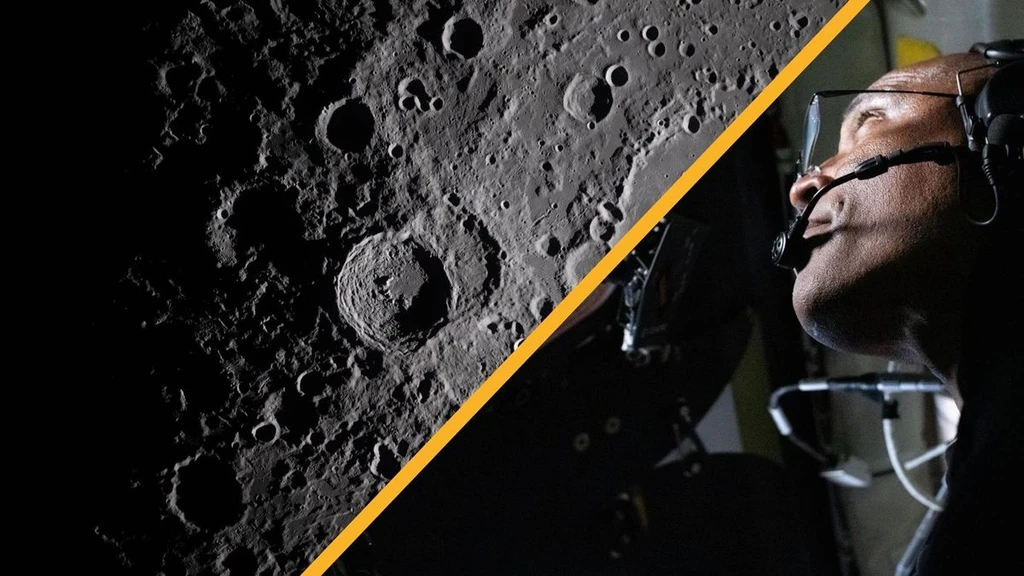
During a historic 7-hour flyby of the moon, the Artemis II crew observed at least four fleeting flashes of light on the lunar surface. These brief events, caused by tiny meteorites striking the moon, have generated significant excitement among scientists. The data gathered from these impacts is crucial for understanding the risks they pose to future lunar infrastructure and sustained human presence.
Mission scientists, like David Kring of the Lunar and Planetary Institute, emphasized the importance of planning for hazardous events, noting that the observed flashes serve as a reminder for such contingencies. The Artemis II crew spotted these flashes against the darkness of the lunar far side, during an event similar to a total solar eclipse. Commander Reid Wiseman reported the observations, noting "audible screams of delight" from mission control as the data came in.
Scientists are now working to correlate the crew's observations with data from the Lunar Reconnaissance Orbiter to refine models of impact frequency. Understanding these impacts, including their shock waves and potential for moonquakes, is vital for ensuring the safety of future lunar habitats. While active seismometers are not currently on the moon, NASA plans to deploy them, enabling precise tracking of impact events and their effects. These observations also hold the potential to reveal lunar geology and expose subsurface ice, which could be harnessed for future missions.