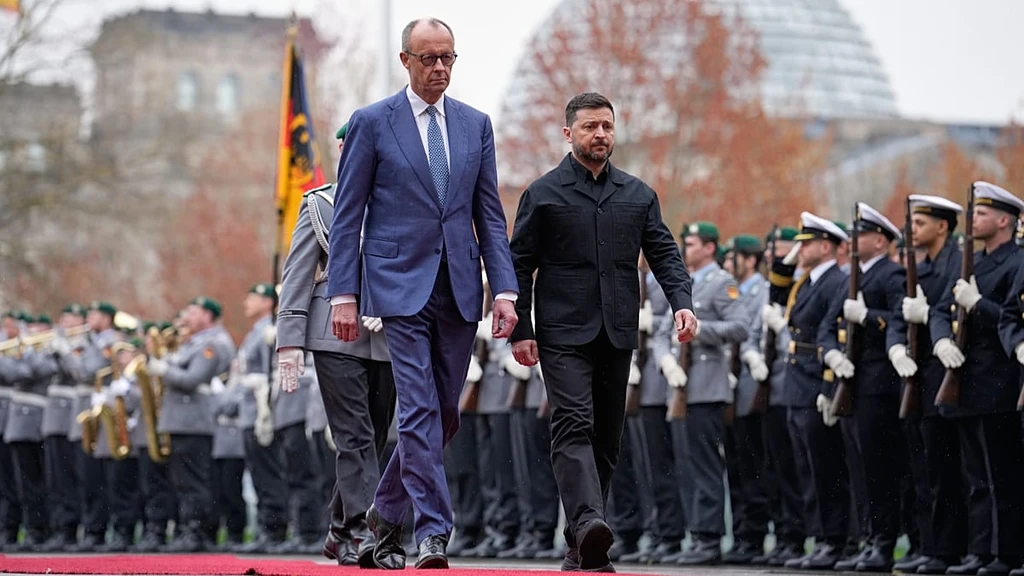
Germany and Ukraine have finalized a significant €4 billion defence package. The agreement includes the delivery of hundreds of Patriot missiles and establishes joint production of AI-enabled drones. This pact was signed during the first bilateral government consultations between the two nations since 2004.
Key aspects of the deal involve sharing digital battlefield data to develop advanced weapons systems. Ukrainian President Volodymyr Zelenskyy met with German Chancellor Friedrich Merz in Berlin to witness the signing. The agreement focuses on analyzing the use of German systems like the PzH 2000 howitzer and IRIS-T air defence on the battlefield. It also integrates Ukrainian expertise and real-time front-line data from platforms like Avengers and DELTA to enhance military decision-making.
The package comprises several hundred Patriot missiles, 36 IRIS-T launchers, and €300 million allocated for Ukraine's long-range strike capabilities. Additionally, 5,000 AI-enabled mid-range strike drones will be jointly produced. President Zelenskyy highlighted that these military elements, alongside new anti-ballistic systems, are crucial for protection against aerial threats.
Germany is financing a contract with Raytheon for Patriot missiles and is collaborating with Diehl Defence for additional IRIS-T system launchers. Chancellor Merz emphasized that Berlin's focus on joint armaments projects supports Ukraine while strengthening European security. He described the Ukrainian military as highly experienced and its defence industry as innovative.
The initiative includes joint ventures for producing medium- and long-range drones under the 'Build with Ukraine' program. Quantum Systems is reportedly involved in producing quadcopter drones for Ukraine's military through a joint venture. This cooperation aims to rapidly scale up production capacity and ensure reliable delivery of operational systems.
Beyond defence, agreements were signed concerning industrial reconstruction, economic cooperation, and reconstruction efforts in Ukraine. Germany will provide support for reforms, including economic and social backing at the local level. New funds are allocated for energy, infrastructure, and housing construction. A new German-Ukrainian working group for business and trade will promote investment and joint projects. Cooperation is also set to intensify in areas such as cyber, agriculture, hydrogen, and critical raw materials, with a focus on a resilient energy system and digitalization.