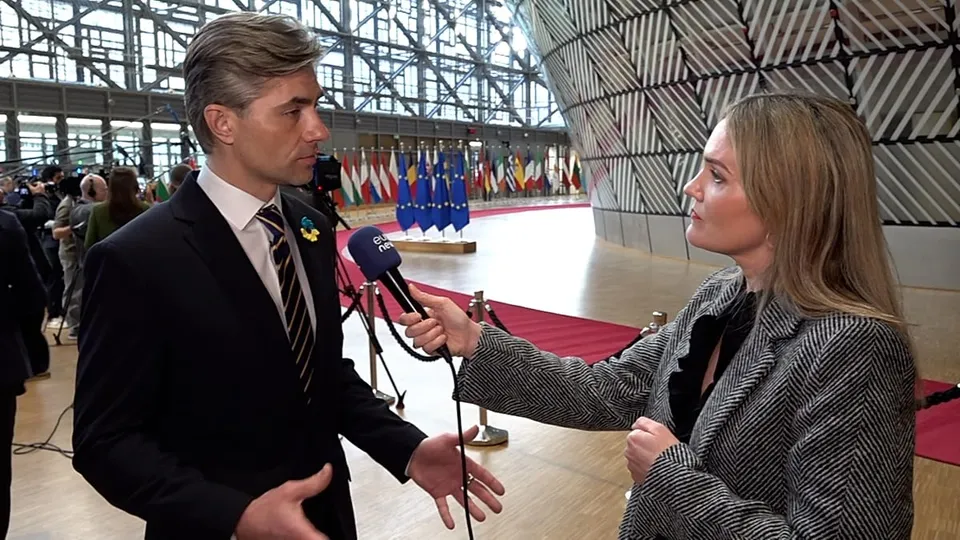
Lithuania is pushing for a significant reform of the European Union's decision-making process, specifically targeting the effectiveness of member states' veto power. This call comes as Hungary announced it would block two key EU decisions vital to Ukraine.
Hungarian Foreign Minister Péter Szijjártó stated that Hungary would block a €90 billion EU loan to Kyiv, a measure previously agreed upon by all 27 member states. Budapest's stance is linked to its demand for the resumption of Russian oil transit through the Soviet-era Druzhba pipeline.
Lithuanian Foreign Minister Kęstutis Budrys expressed frustration over Hungary's obstruction, emphasizing that such actions undermine the EU's message of solidarity and resolve. He noted that Hungary's "exploitation of the principle of unanimity" is a recurring issue.
Budrys suggested a review of the EU's decision-making process for common foreign and security policy, including a potential shift to qualified majority voting (QMV). QMV requires 15 out of 27 member states, representing 65% of the EU's population, to approve a measure, thereby reducing the impact of individual state vetoes.
Additionally, Budrys raised the possibility of revisiting Article 7 of the EU treaty, which allows for the potential reduction of voting rights for member states found to be in breach of core EU values. He warned that the current trajectory could diminish the EU's role as a geopolitical actor.