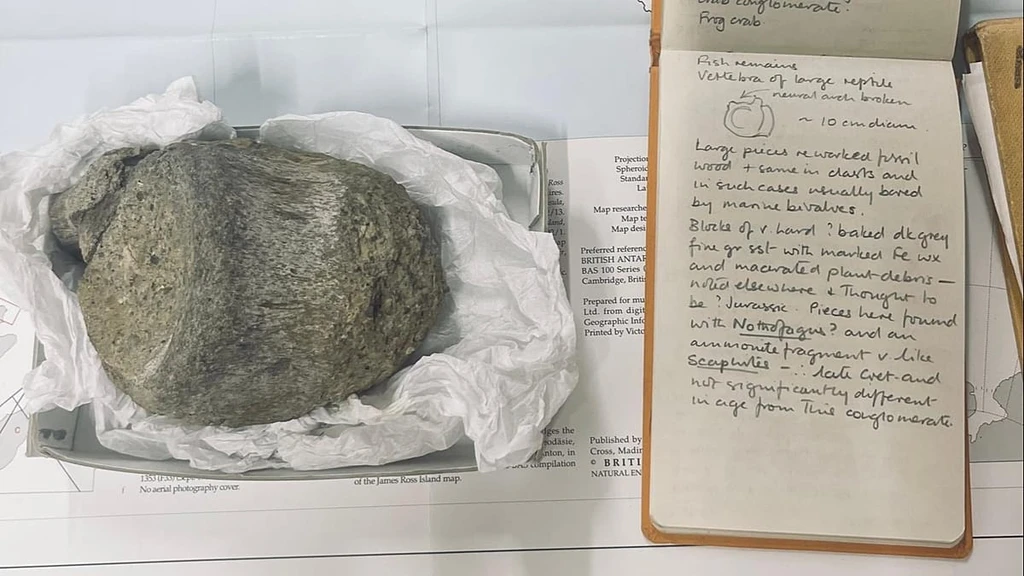
A bone found during a 1985 British scientific expedition is now confirmed as Antarctica's first dinosaur fossil. The vertebra belongs to a titanosaur, a group of massive sauropod dinosaurs.
British Antarctic Survey geologist Mike Thomson discovered the fossil on James Ross Island. It was only recently reviewed by palaeontologist Mark Evans, who confirmed the identification.
The specimen dates to the Late Cretaceous period, approximately 82 million years ago. Scientists believe the animal was carried out to sea after death and fossilized on the seabed.
Professor Paul Barrett of London's Natural History Museum states the find offers new clues about dinosaur migration across the ancient southern continents, which were then connected.
At that time, Antarctica was not the icy continent it is today. It featured lush temperate forests and a warmer climate driven by intense volcanic activity.
Antarctica's ice sheet limits fossil discoveries, but researchers believe more evidence of its ancient life may be revealed as the ice retreats.