The White House stated that President Donald Trump is the sole authority on his strategy regarding Iran. Press Secretary Karoline Leavitt issued a statement indicating that "Only the President knows where things stand and what he will do," in response to queries about nuclear weapon usage and stalled negotiations.
Earlier, Trump issued a stark warning on social media, stating "a whole civilization will die tonight, never to be brought back again" if a deal is not reached by 8 PM Eastern Time. He expressed a desire to avoid such an outcome but acknowledged its possibility, suggesting a shift in Iranian leadership might allow for a "revolutionarily wonderful" development. Trump characterized the moment as one of the most significant in global history, potentially ending "47 years of extortion, corruption, and death."
Trump had previously threatened to target Iranian infrastructure, including oil facilities, if Tehran did not agree to a deal by Tuesday. Concurrently, the UN human rights chief, Volker Türk, criticized "incendiary rhetoric" surrounding the conflict, reminding all parties that "deliberately attacking civilians and civilian infrastructure is a war crime."
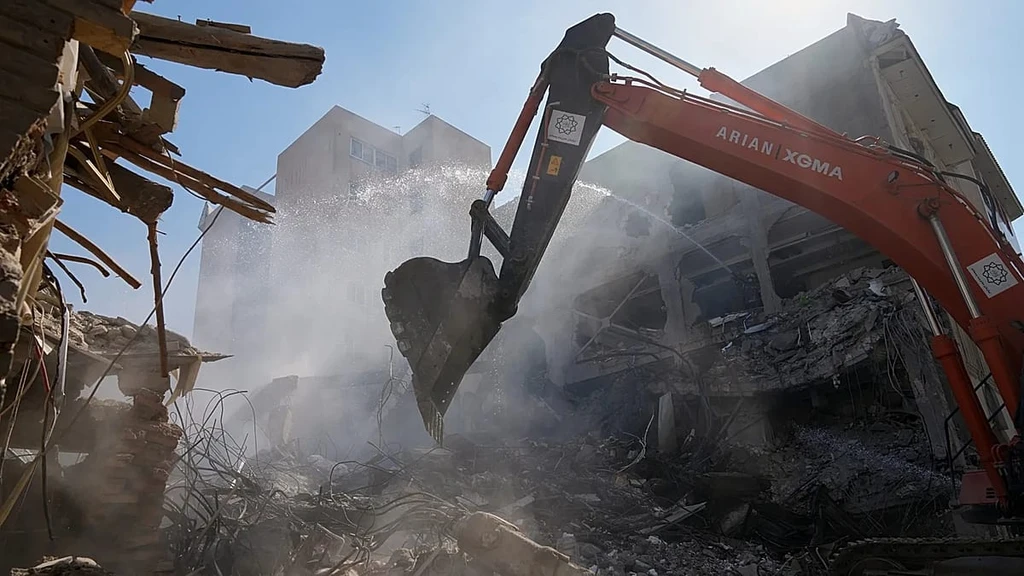
Israel's Military Chief, Lieutenant General Eyal Zamir, described the joint US-Israeli campaign against Iran as "approaching a strategic crossroads," vowing to "intensify the damage inflicted on the regime." Reports from Iran indicated damage to bridges, railway infrastructure, and a key highway following air strikes, with two fatalities reported in Kashan.