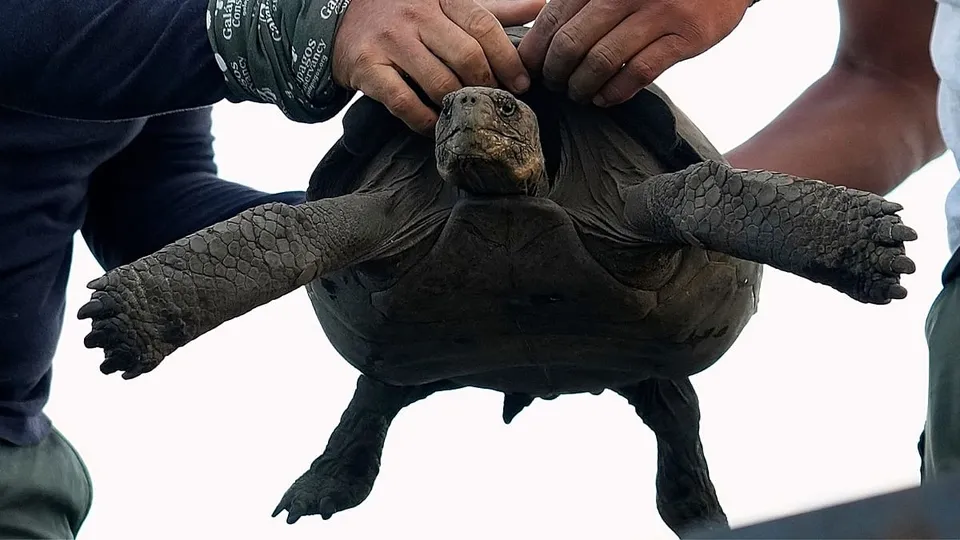
Floreana Island in Ecuador’s Galápagos archipelago is witnessing the return of giant tortoises, nearly 150 years after the species went extinct there. On Friday, 158 juvenile hybrids, aged 8 to 13, were released into their ancestral habitat. These newcomers are large enough to defend themselves against introduced predators like rats and cats.
The breeding program aims to restore the extinct Floreana species by introducing 700 planned juveniles. These released specimens carry between 40% and 80% of the genetic makeup of the original Chelonoidis niger species. Scientists are selecting adults with the strongest genetic makeup to gradually bring the extinct Floreana species back to its former purity.
Two centuries ago, Floreana was home to approximately 20,000 giant tortoises. Whaling, fires, and human exploitation led to their extinction on the island. The reintroduction of a species with a significant genetic component of the original is vital for ecological restoration.
Floreana, a remote volcanic island spanning 173 square kilometers, is a vital ecological site. The reintroduced tortoises will share their territory with nearly 200 residents and diverse wildlife, including flamingos, iguanas, penguins, sea gulls, and hawks. However, they must also contend with introduced plant and animal species that pose potential threats.
The return of the giant tortoises is a dream come true for Floreana residents, who feel immense pride in the project. The Galápagos Islands, designated a Natural World Heritage Site by the UN in 1978, are recognized for their unique terrestrial and marine species.