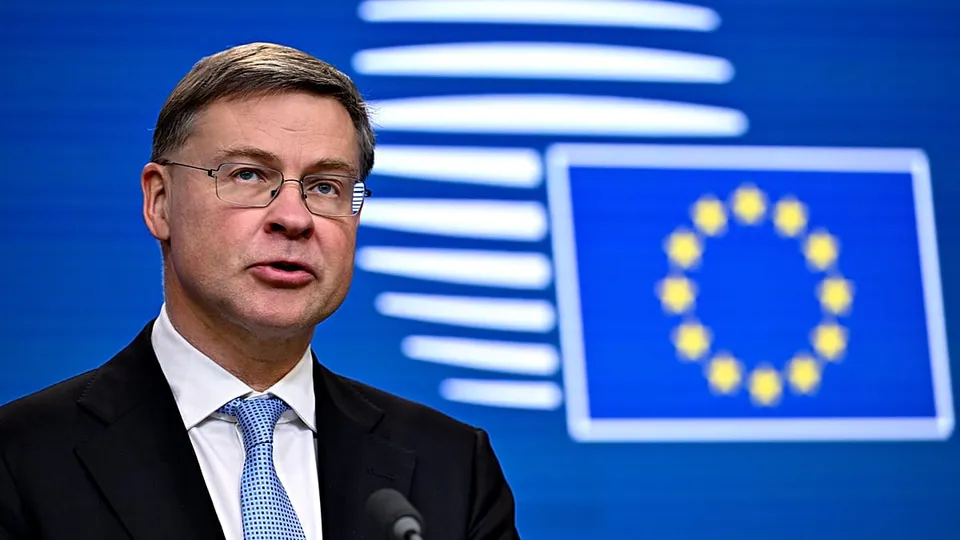
The European Union is prepared to enact a complete ban on maritime services for Russian oil tankers if G7 allies cannot reach an agreement, according to Valdis Dombrovskis, the European Commissioner for the Economy. Brussels aims to approve the 20th sanctions package by February 24th, marking the fourth anniversary of Russia's full-scale invasion of Ukraine.
This potential ban would effectively end the G7's price cap on Russian oil within the EU's jurisdiction, as EU companies would be prohibited from servicing Russian tankers irrespective of the crude's sale price.
Dombrovskis stated that while coordinated action with G7 partners is preferred, the EU will proceed independently if a broader agreement is not reached. This marks a shift from earlier indications that the EU would await a G7 decision.
Concerns have been raised by Greece, a major maritime nation, which fears the ban could increase competition from India and China, bolster Russia's "shadow fleet," and encourage "deflagging" of vessels. Discussions among EU ambassadors are ongoing to secure unanimous approval.
The proposed sanctions package also includes the first-ever activation of the Anti-Circumvention Tool. This measure targets the re-export of EU-made computer numerical machines and radios to countries suspected of supplying them to Russia. Kyrgyzstan is highlighted as a country where EU trade has surged significantly since the invasion, with a substantial portion of exports being machinery.
EU sanctions envoy David O'Sullivan plans to visit Kyrgyzstan to discuss the implications of activating this tool. The push for new sanctions comes amid ongoing trilateral talks and a general view among European leaders that Russia is not prepared to make concessions, necessitating further economic pressure.