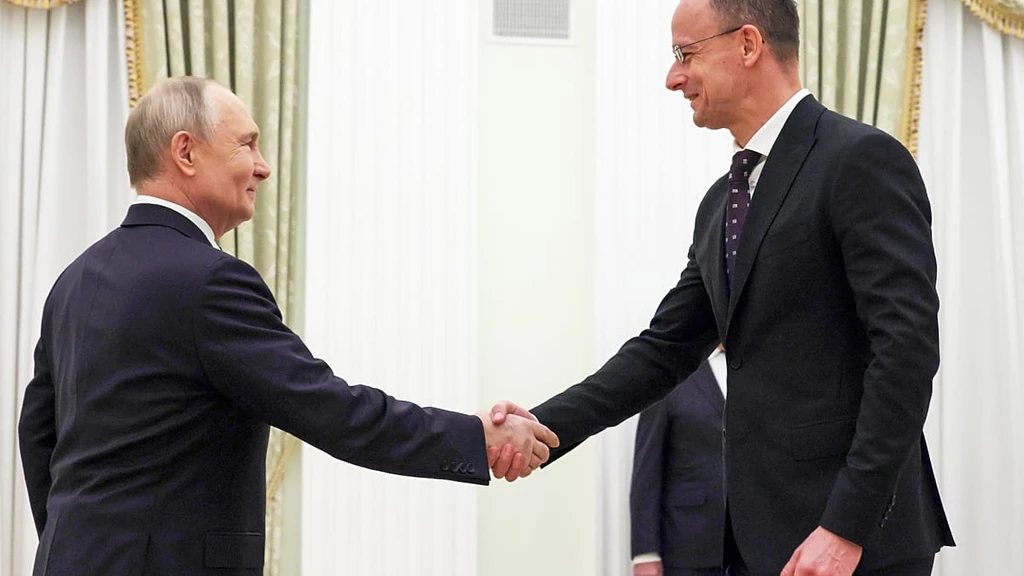
The European Commission has demanded Hungary clarify 'concerning' reports that Foreign Minister Péter Szijjártó regularly shared sensitive EU meeting information with Russian counterpart Sergei Lavrov during Brussels gatherings.
The allegations, reported by The Washington Post, suggest Szijjártó communicated with Lavrov during breaks at EU Council meetings-violating the principle of sincere cooperation among member states.
Hungary's government dismissed the claims as 'fake news.' However, the Commission emphasized trust is foundational to EU operations and called for immediate clarification.
Political tensions are escalating ahead of Hungary’s parliamentary elections. Prime Minister Viktor Orbán’s Fidesz party faces a strong challenge from opposition leader Péter Magyar’s Tisza Party, which leads in polls.
Orbán’s government remains one of the few in Europe maintaining close ties with Moscow. Hungary continues importing significant volumes of Russian fossil fuels despite EU efforts to reduce energy dependence.
Szijjártó has visited Moscow 16 times since 2022, including a March 4 meeting with President Vladimir Putin at the Kremlin.
Polish Prime Minister Donald Tusk criticized the revelations, stating suspicions about Hungarian-Russia coordination were longstanding.
The EU Council is assessing whether any rules were breached. A source told Euronews that the matter reflects a broader breakdown in trust with Budapest.
The controversy follows Orbán’s recent veto of a €90 billion EU loan package for Ukraine-a decision condemned by most member states, despite his prior approval at the December summit.
Tisza Party leader Péter Magyar vowed to investigate if elected. 'If confirmed, this would amount to treason,' he said, citing potential life imprisonment under Hungarian law.