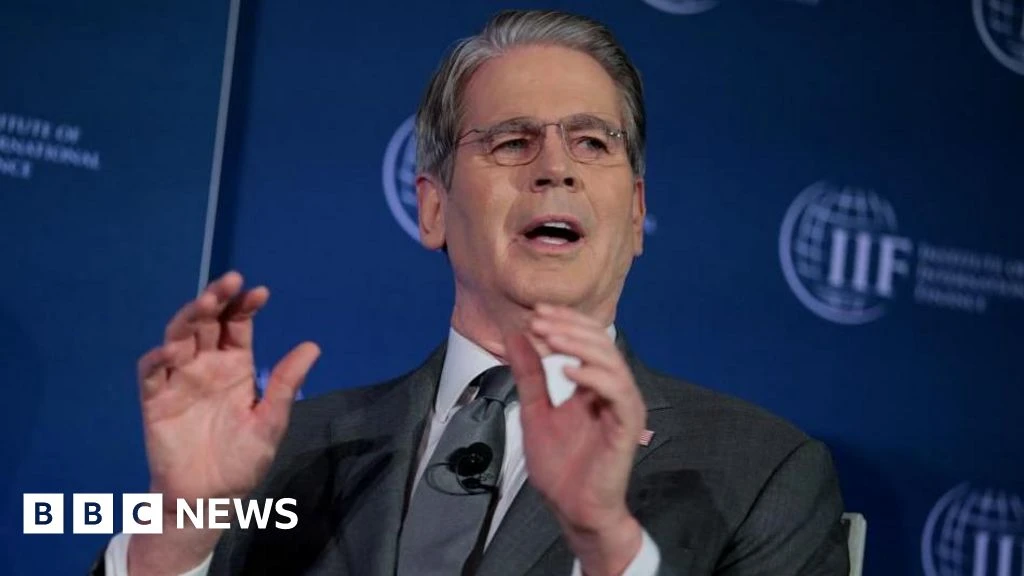
US Treasury Secretary Scott Bessent has indicated that a "small bit of economic pain" is an acceptable price for achieving long-term international security, even as the International Monetary Fund (IMF) warns of a potential global recession due to the conflict with Iran.
Bessent emphasized that the primary goal of the conflict is to neutralize the threat of Iran acquiring nuclear weapons, stating, "I wonder what the hit to global GDP would be if a nuclear weapon hit London... I am saying that I am less concerned about short-term forecasts, for long-term security."

The IMF's World Economic Outlook report projects that a worst-case scenario, involving sustained spikes in oil, gas, and food prices, could reduce global growth to below 2% in 2026, a level not seen outside of major crises since 1980.
Energy prices have surged significantly following disruptions to key shipping routes and the failure of peace talks. The IMF cautioned that the global economy is again threatened by war in the Middle East, with potential oil price increases to $110 per barrel this year and $125 in 2027, leading to potential inflation reaching 6% next year. This could compel central banks to raise interest rates.
IMF chief economist Pierre-Olivier Gourinchas warned that a prolonged conflict would cause spiraling inflation, increased unemployment, and food insecurity. He drew parallels to the 1970s oil crisis but noted the world's reduced dependence on oil could mitigate the consumer impact.