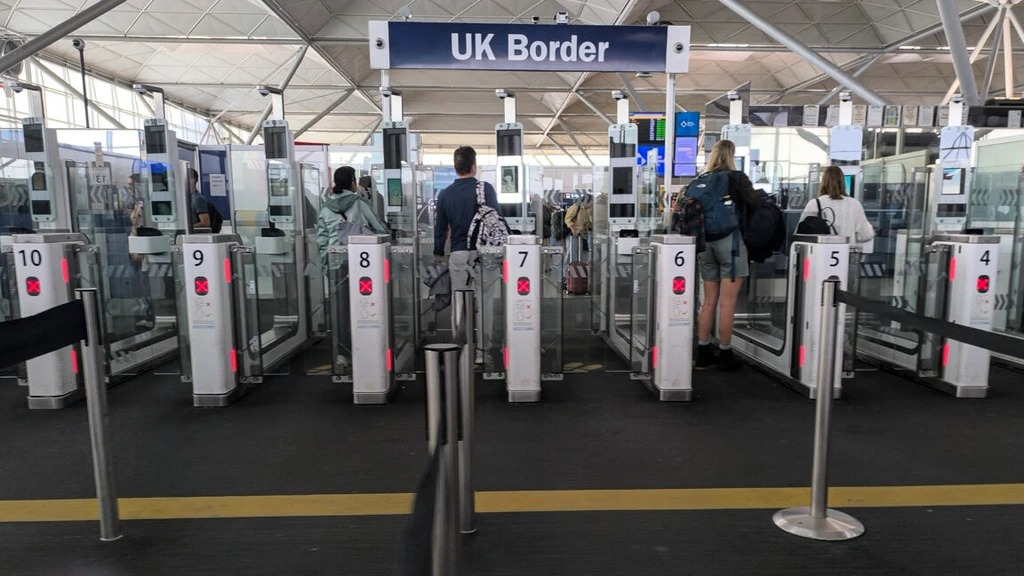
The British government intends to deploy facial age estimation technology at borders starting next year to assess undocumented asylum seekers. This initiative marks the first known use of such AI in immigration enforcement, aiming to distinguish minors from adults. However, leaked internal reports indicate the technology frequently misidentifies children as adults and exhibits significant racial bias.
Internal Home Office testing reveals the system performs substantially worse on Sub-Saharan Africans, the largest demographic of recent arrivals. For female Sub-Saharan migrants, the average error margin is 4.6 years, potentially classifying a 13-year-old as an adult. Misclassified minors face detention in adult facilities and loss of legal protections. The government disbanded its scientific advisory committee on age estimation while exploring this AI deployment, despite experts calling the technology hideously inaccurate.
The UK spent over $400,000 on face-scanning systems from German firm Cognitec. Independent audits show these systems misclassify twice as many 16-year-olds as adults when using lower-quality border photos compared to controlled visa images. Stress, trauma, and poor lighting further degrade accuracy in real-world conditions. While officials claim AI serves only as an additional tool, critics warn that automation bias may override human judgment in high-pressure border environments.
Sixty-two organizations have urged the Home Office to abandon the program, citing baked-in inaccuracies and ethical risks. Human rights experts argue that deploying experimental technology on traumatized populations is dehumanizing and legally precarious. The National Physical Laboratory has been commissioned to review the trials, but operational protocols remain undefined as the 2027 rollout approaches.