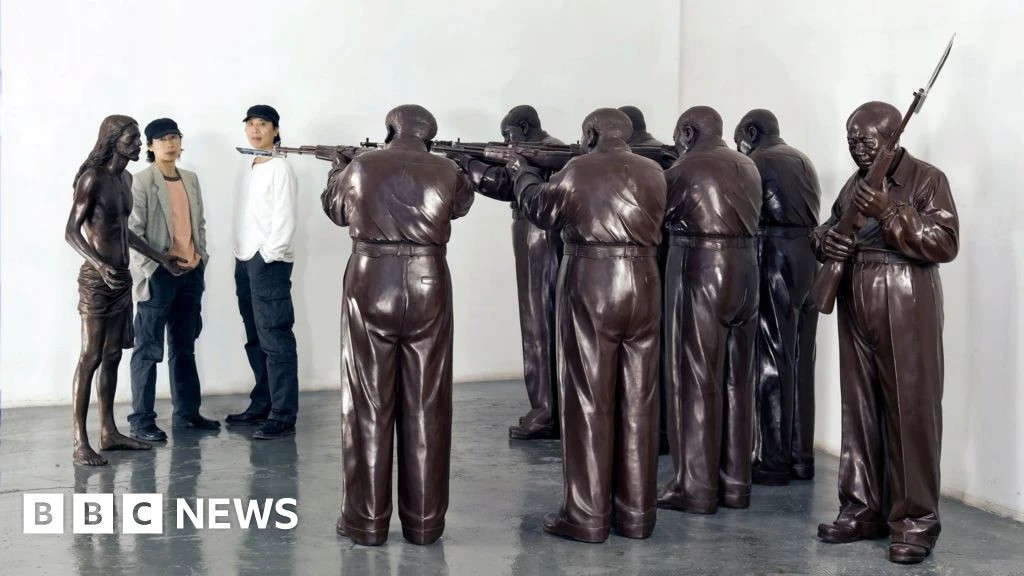
Renowned Chinese sculptor Gao Zhen, known for his provocative works satirizing China's political past and present, has been arrested and faces trial for "insulting revolutionary heroes and martyrs." The 69-year-old artist, who emigrated to the U.S. in 2022, was detained in Beijing while visiting family, and his artworks were seized. Authorities also barred his wife and young son from leaving the country.
Gao's arrest, 15 years after his controversial pieces like "Execution of Christ" (depicting rifle-wielding Mao Zedong figures surrounding Jesus) and "Mao's Guilt" were exhibited, signals a significant tightening of creative freedom in China. His brother, Gao Qiang, states the trial demonstrates that "even if a work was made 15 years ago, it can still be turned into a crime if today's political climate changes." China-watchers note a broader pattern of increased government control across arts and media.
Journalist Ian Johnson describes the current period as the "darkest period of time in decades" for freedom of expression in China, surpassing crackdowns seen after the Tiananmen Square massacre. Experts suggest a perceived global decline in democratic norms may embolden Beijing to increase its crackdowns without international rebuke. The UN human rights office has called for Gao's release, citing concerns over retroactive criminal law and punishment of artistic expression.
Gao suffers from several serious health conditions, and repeated requests for medical bail have been denied. His brother expresses grave concern for his health and well-being. The Gao brothers gained prominence after Mao Zedong's death, but the space for artistic expression has contracted significantly since Xi Jinping's rise to power in 2012. Amendments to China's criminal code in 2021 strengthened laws against insulting "heroes and martyrs," with Mao being a particularly sensitive figure.
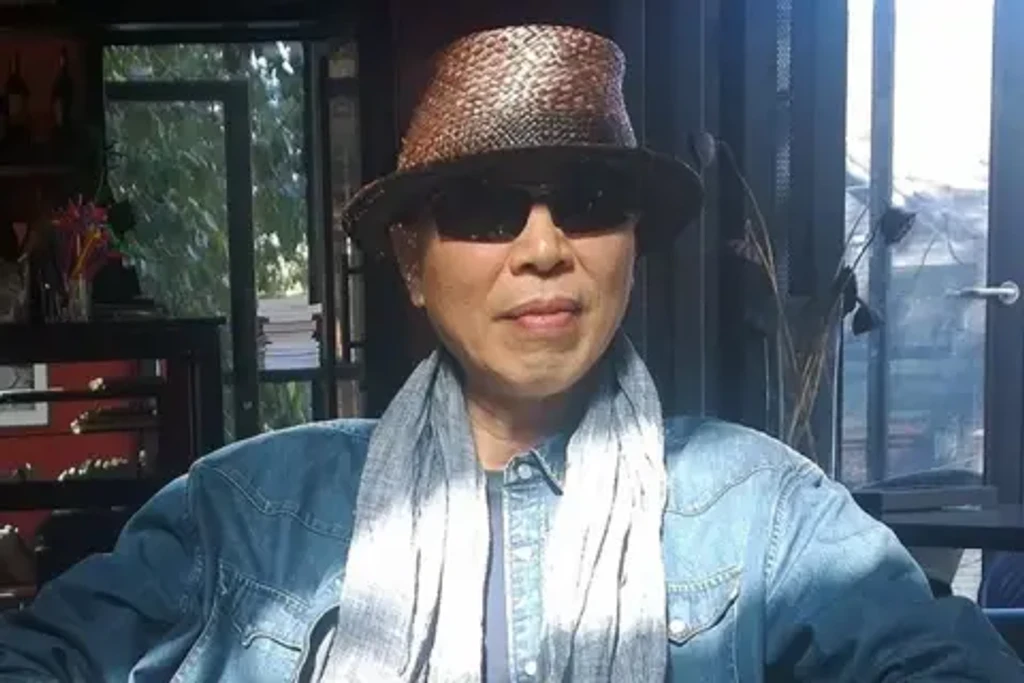
The Chinese government has not officially commented on the trial, which was held in secrecy, closed to the public, family, and diplomats. Gao Qiang believes this secrecy indicates the authorities' awareness that the prosecution lacks public scrutiny and would expose its political vindictiveness. Critics like artist Badiucao argue that such actions reveal an unprecedented level of self-confidence from the CCP, willing to wield power without hesitation and disregard international reputation.
Gao Zhen's case is notable not only for the retroactive application of law but also because he did not directly criticize the current leadership. This suggests a heightened sensitivity to historical narratives. The closed trial risks becoming an unintentional global showcase for the art it seeks to suppress. Gao Qiang urges international attention, stating that his brother's fate is a test of freedom of expression and the rule of law, warning that silence could signal that states can retroactively criminalize art, satire, and memory.