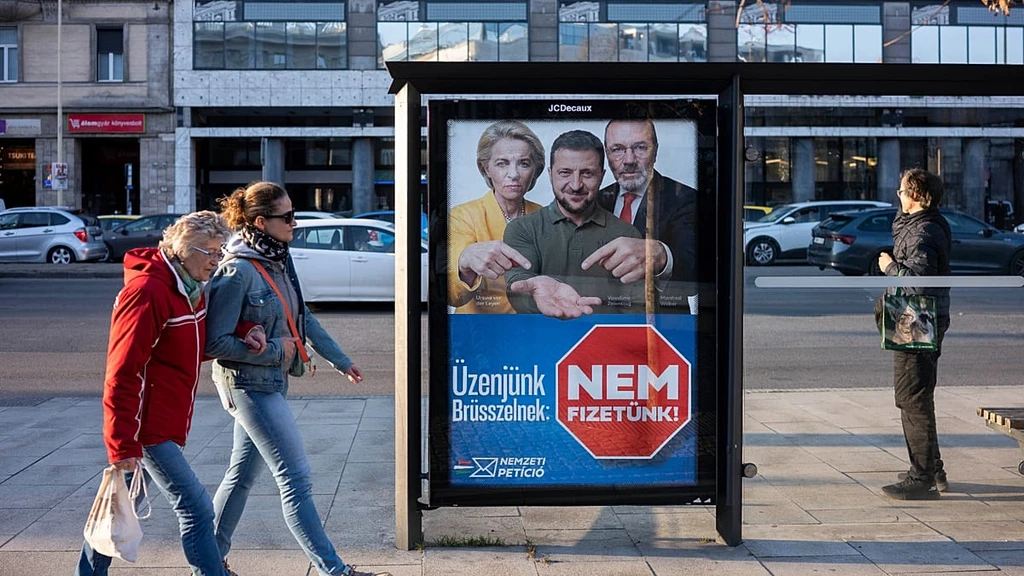
Hungarians are voting in a pivotal election seen as a referendum on Prime Minister Viktor Orbán's 16-year rule. Orbán, a dominant figure since 2010, faces his most significant challenge from former ally Péter Magyar and his Tisza Party.
Analysts describe this election as having genuine stakes, with polling suggesting a strong challenge to Orbán's consistent majorities. Magyar's campaign has focused on grassroots outreach, promising a change of government and opposition renewal.
The outcome is closely watched in Brussels and other European capitals, where Orbán's government has frequently clashed with EU institutions and maintained ties with Russian President Vladimir Putin. Orbán's "patriotic politics" stance is seen as a counterpoint to liberal democracy, and his defeat could signal a setback for similar international movements.
Magyar, aligned with the European conservative mainstream and the European People's Party, pledges to restore Hungary's relations with the EU and NATO.
The campaign has featured sharp contrasts, with the opposition highlighting domestic issues like public services and corruption, while Orbán has focused on foreign policy and warned of risks from Ukraine's potential EU membership. Allegations of intimidation, violence, and foreign interference, including leaked recordings involving Russia, have marked the election period.
Hungary utilizes a single-round electoral system for its 199 parliamentary seats. Preliminary results are expected later tonight.