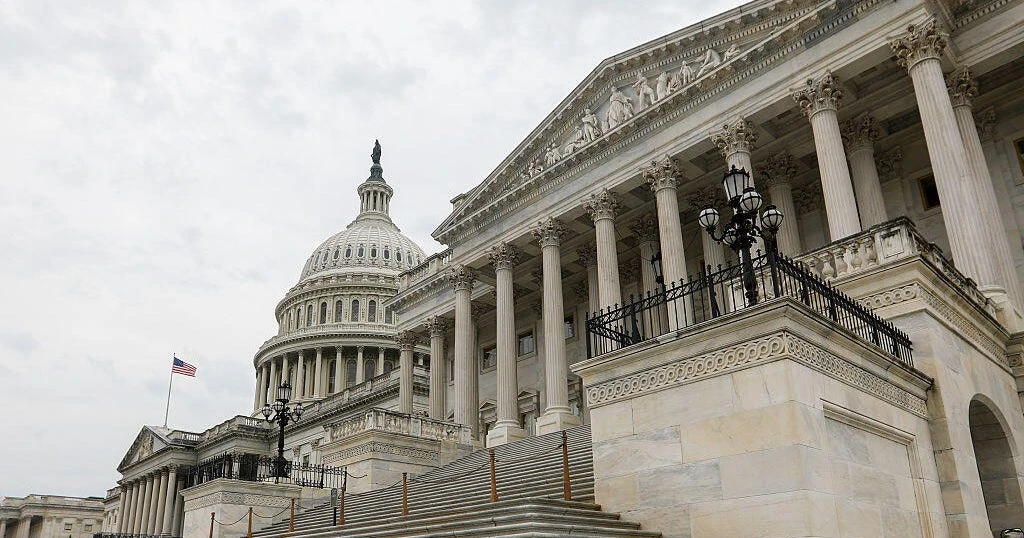
The House is scheduled to vote Thursday on a measure aimed at preventing President Trump from initiating additional military action against Iran without prior authorization from Congress. This comes after a similar attempt failed in the Senate. The vote highlights concerns over a potential prolonged conflict in the Middle East, with a CBS News poll indicating a majority of Americans disapprove of U.S. military action against Iran and believe Congress should approve any further engagement.
GOP Rep. Thomas Massie introduced the war powers resolution, directing the president "to remove United States Armed Forces from unauthorized hostilities in the Islamic Republic of Iran." House Speaker Mike Johnson argued that the vote "plays right into the hands of the enemy," stating the Iran operation has been "necessary, lawful and effective" and reversing it would "weaken America."
Massie countered that many lawmakers avoid recorded votes on such issues due to the U.S.'s "terrible track record of meddling in the Middle East," preferring to delegate the decision to send troops without their direct consent. The Constitution grants Congress the sole power to declare war, though presidents have increasingly acted without explicit authorization.
The resolution is expected to divide both parties. Some Republicans, like Rep. Warren Davidson, support the measure, citing the "moral hazard posed by a government no longer constrained by our Constitution." However, others, such as Rep. Don Bacon, plan to support the President, while acknowledging that opinions could shift if the conflict extends. Democrats, led by House Minority Leader Hakeem Jeffries, largely back the resolution, emphasizing Congress's constitutional authority. Yet, a few Democrats, including Rep. Josh Gottheimer, have expressed concerns that the resolution could "restrict the flexibility needed to respond to real and evolving threats."