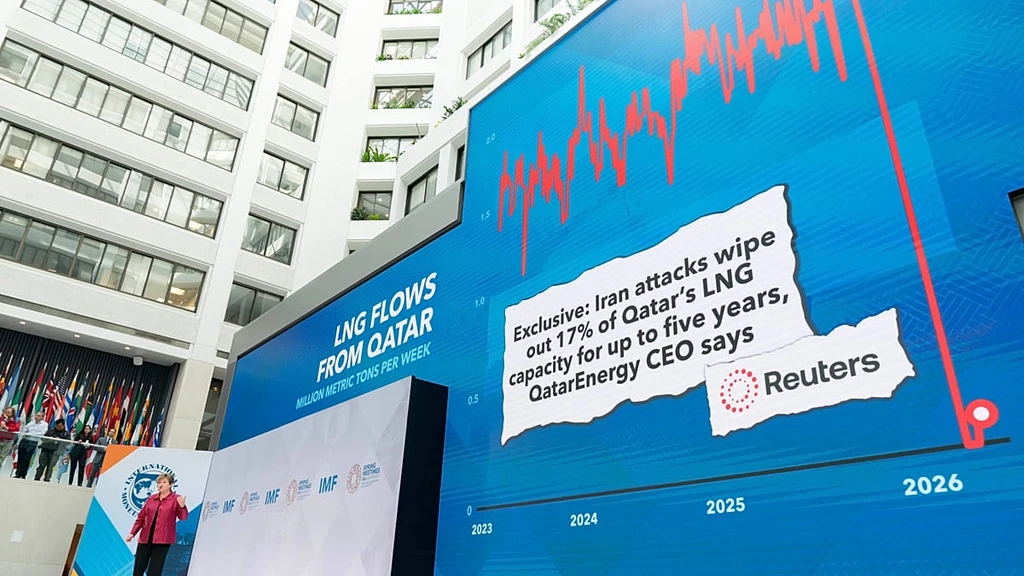
The International Monetary Fund (IMF) has significantly lowered its economic growth forecast for the Eurozone to 1.1% for the current year, down from an earlier projection of 1.4%. This revision stems directly from the war in Iran and its destabilizing effect on global energy markets.
The IMF's World Economic Outlook highlights that disruptions to energy supplies, including the blockade of the Strait of Hormuz, have stalled recovery for major economies. Global inflation expectations have surged to 4.4% as a result of escalating hostilities.
Investment strategist Lindsay James noted that the prolonged conflict carries a substantial risk of economic recession. For Europe, highly dependent on natural gas, a projected 19% spike in energy costs presents a considerable challenge to industrial output.
Chief economist Pierre-Olivier Gourinchas stated that while the global economy showed resilience to trade policies, the Middle Eastern crisis has halted that progress. The IMF specifically warns that the 21 Eurozone nations are particularly vulnerable due to their limited energy independence.
Ukraine is also experiencing severe economic strain, with inflation reaching 7.9% in March, as it defends against Russia's invasion. The National Bank of Ukraine described the situation as precarious, balancing war efforts with external price shocks.
Meanwhile, the United States faces a reduced growth forecast of 2.3%, with energy shocks being a dominant factor. Russia, however, is set to see a slight upgrade to 1.1% growth, benefiting from higher oil export revenues.
The IMF remains cautious, emphasizing that downside risks are elevated. Should energy volatility continue into 2027, a severe scenario could see global growth fall to 2%, necessitating sustained high interest rates to combat persistent inflation.