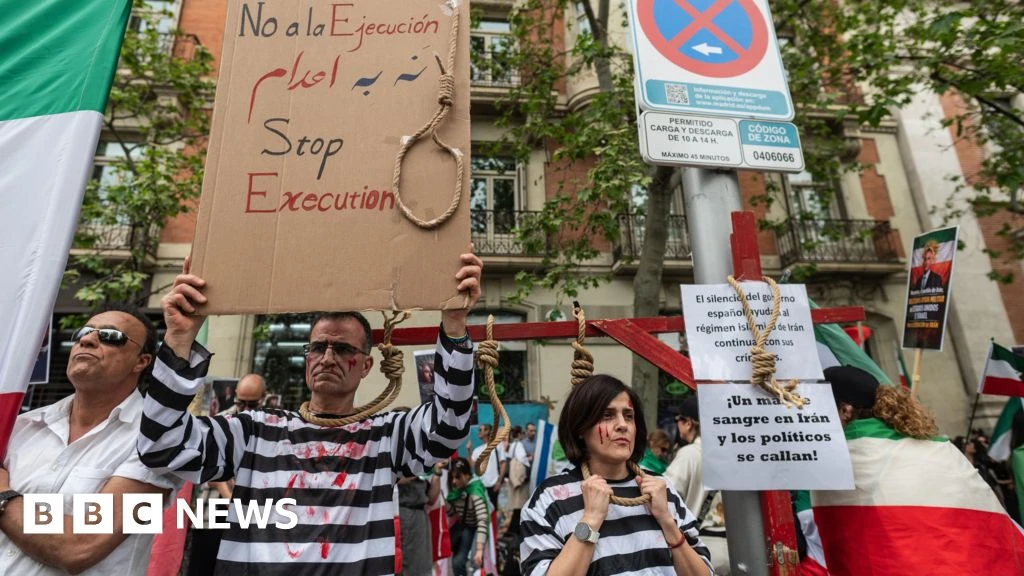
Iran executed at least 1,639 people last year, the highest number recorded since 1989, according to reports from two non-governmental organizations.
The majority of those executed were convicted of drug-related offenses or murder. However, at least 57 individuals were sentenced for security-related charges, including two protesters. NGOs express concern that executions could increase this year following recent protests and ongoing conflicts.
Since February 28th, seven people have been executed in connection with protests that led to significant casualties and detentions. Six individuals convicted of membership in the exiled Mujahideen-e Khalq (MEK) group and one for spying for Israel were also executed.
Iran consistently ranks as the world's second-highest executioner after China. Last year's figures represent an average of four executions per day. Drug offenses accounted for 795 executions, a 58% increase from the previous year, while murder convictions led to 747 executions, a 79% rise. Additionally, 37 individuals were executed for rape.
At least 48 women were executed, the highest number in over two decades. Ethnic minorities and marginalized groups were disproportionately represented among those executed. More than half of the sentences were issued by Revolutionary Courts following what NGOs describe as unfair trials.
There is a significant risk that executions will be used more extensively as a tool of oppression if the current crisis persists. At least 16 individuals sentenced in connection with the 2022 "Woman, Life, Freedom" protests are at risk of execution, with 27 others sentenced this year and hundreds more facing capital charges.