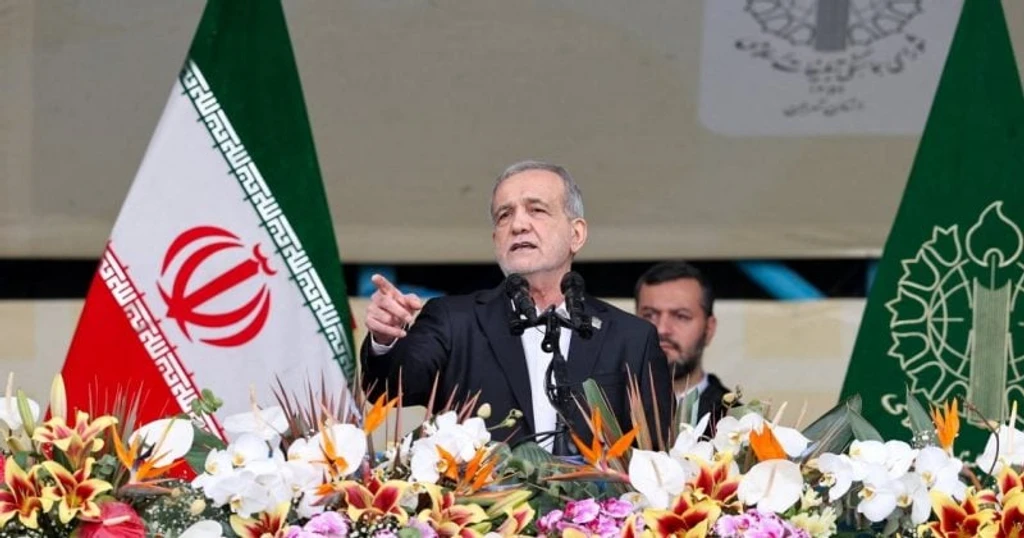
Iranian President Masoud Pezeshkian and Foreign Minister Abbas Araghchi abruptly left Najaf, Iraq, on Monday. Their departure came as the United States launched a fresh wave of strikes across southern Iran.
The two officials had traveled to the holy city for funeral proceedings for Ayatollah Ali Khamenei. Khamenei, 86, was killed during US-Israeli airstrikes on February 28, 2026. His funeral processions began in Tehran earlier this month.
US Central Command confirmed strikes on over 80 targets in southern Iran starting July 7. Officials described the action as retaliatory, targeting Iranian military infrastructure. This was in response to Iranian assaults on commercial vessels in the Strait of Hormuz.
The Strait of Hormuz is a critical global chokepoint. Roughly a fifth of the world's daily oil supply passes through the narrow waterway.
The funeral ceremonies have also exposed deep political fractures within Iran. Massive crowds in Tehran, Qom, and Najaf saw hardline factions direct chants against Pezeshkian and Araghchi. Such public dissent against the sitting president during a period of national mourning is highly unusual. It signals a real-time contest over the power vacuum following Khamenei's death.
President Pezeshkian now faces pressure from two sides. Hardliners blame his diplomatic approach for failing to prevent the strikes that killed Khamenei. Meanwhile, the ongoing US military campaign makes any negotiation politically toxic domestically.
Energy markets are watching the situation closely. The stated justification for the US strikes was Iranian attacks on shipping in the Strait of Hormuz. Any further escalation there could disrupt global oil flows and move prices significantly.