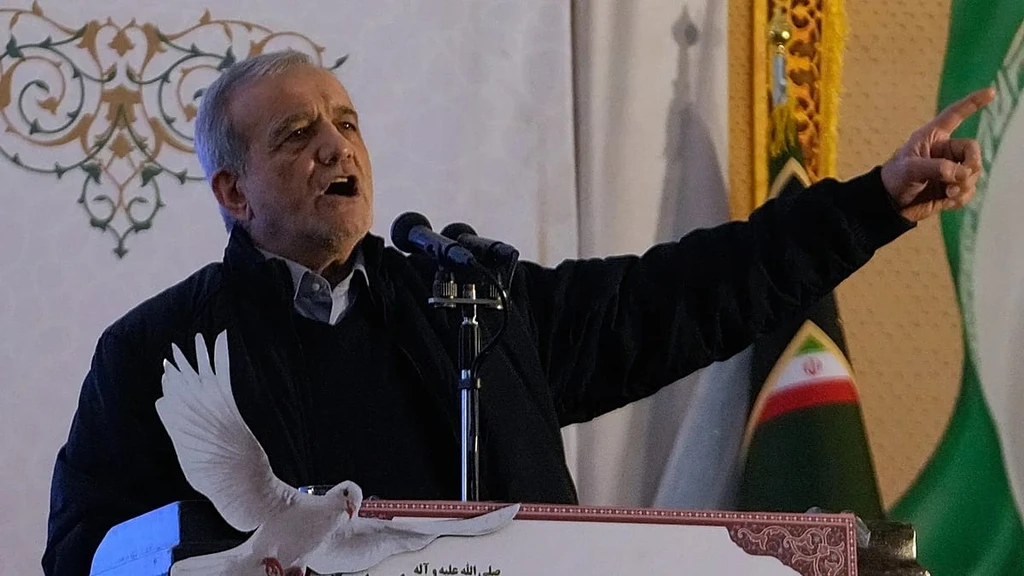
Iran's President Masoud Pezeshkian has vehemently rejected the United States' demand for unconditional surrender, dismissing it as an "unachievable dream." In a televised address, Pezeshkian also extended an apology for Iran's strikes on "neighboring countries," announcing a halt to these actions and attributing them to internal miscommunication.
He noted ongoing mediation efforts but affirmed Iran's readiness to defend its "dignity & sovereignty." Pezeshkian linked recent events to the killing of top Iranian officials, suggesting a loss of command and control within the armed forces.
These statements follow intense Iranian fire targeting Gulf Arab states, occurring concurrently with continued air strikes by Israel and the United States against Iran. Attacks were reported in Bahrain, Saudi Arabia, and the United Arab Emirates early Saturday.
The conflict shows no immediate end in sight. The US Treasury Secretary indicated a major bombing campaign is still anticipated. Iran's UN ambassador stated the country will "take all necessary measures" for defense.
Explosions were observed over Tehran as Israel confirmed a broad wave of strikes. The US and Israel have targeted Iran's military capabilities, leadership, and nuclear program, with stated goals for the war having shifted. The conflict has resulted in significant casualties across Iran, Lebanon, and Israel, with six US troops also reported killed.
Sirens sounded in Bahrain amid Iranian attacks, and Saudi Arabia reported intercepting drones and a ballistic missile. Dubai experienced blasts, leading to the suspension of flights at its international airport. Qatar's energy minister warned of potential global economic collapse due to the conflict's impact on energy exports.
Regional analysts suggest Iran may be making a "strategic miscalculation" by spreading the conflict. Saudi Arabia and Pakistan, bound by a mutual defense pact, met to discuss ways to halt Iranian attacks. Incoming missiles from Iran also prompted air raid alerts across Israel.