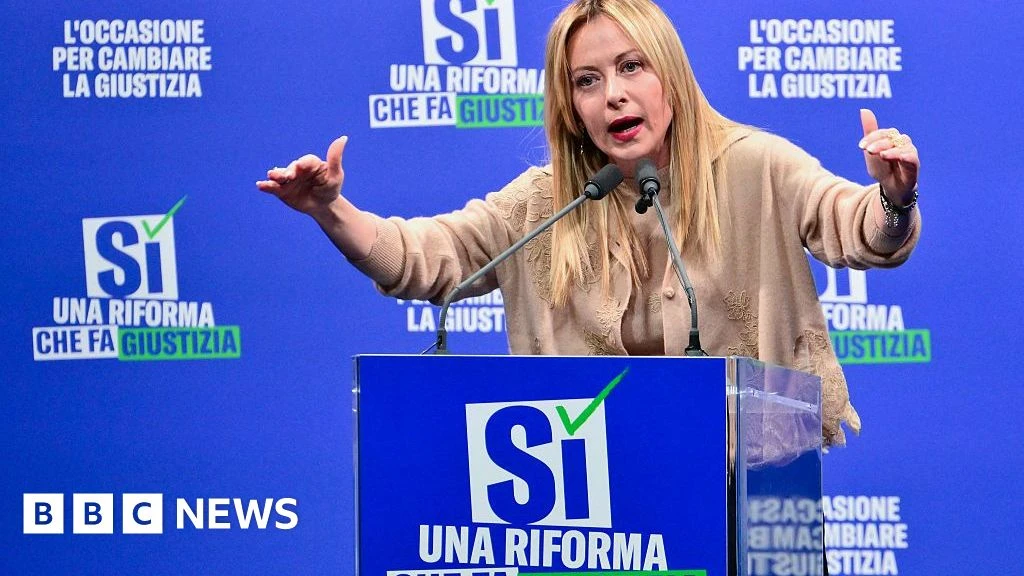
Italy’s Prime Minister Giorgia Meloni is pushing for a constitutional referendum that would separate judges and prosecutors into distinct career paths and create a new disciplinary court. The reform, backed by her Fratelli d'Italia party and the legacy of Silvio Berlusconi’s Forza Italia, aims to make the judiciary more meritocratic and efficient.
Getty Images
Meloni has campaigned aggressively, appearing on podcasts and engaging younger voters-swapping her formal suit for a sparkly jumper to reach broader audiences. She insists the vote is about justice, not her leadership.
Opposition parties, including trade unions, oppose the reform, calling it a power grab that could undermine democracy. Critics warn that Meloni’s past clashes with courts and her rhetoric on immigration signal an effort to politicize the judiciary.

Even some on the left support the change, citing entrenched political factions within the judiciary. Professor Alessandro Sterpa calls the current system dysfunctional, noting that 'correnti' influence has long tainted proceedings.
The referendum lacks a turnout threshold-whichever side wins the most votes prevails. With low engagement favoring opponents, Meloni’s campaign hinges on mobilizing her base. A defeat would not force her resignation but would severely weaken her political standing.

The stakes are high: a win opens the door to further constitutional changes, including expanding executive power in future referendums. Yet, with gas prices rising and war fatigue mounting, Meloni’s grip on stability faces its toughest test yet.