Iran has threatened to attack any vessel that tries to transit the Strait of Hormuz without permission from its military, challenging a plan announced by President Trump for the American military to "guide" commercial ships through the narrow waterway.
The U.S. military says 15,000 forces and more than 100 aircraft are involved in the effort, which he called "Project Freedom."
The Iranian regime says it has received a U.S. response to its latest 14-point peace proposal, which it says is aimed at ending the war, not extending the current ceasefire. Mr. Trump said over the weekend that he'd likely reject the Iranian proposal, as "they have not paid a big enough price."
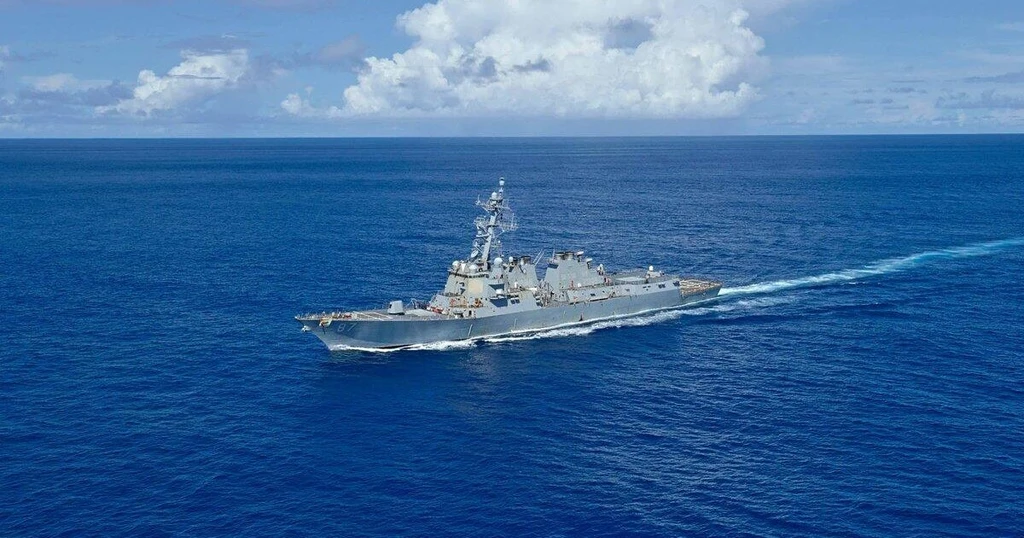
The USS Mason guided-missile destroyer sails within the U.S. Central Command area of responsibility in the Middle East, deployed as part of the George H.W. Bush Carrier Strike Group, in a photo shared on April 29, 2026, by the U.S. military's Central Command, amid a ceasefire in the war with Iran. U.S. Central Command
Brigadier General Mohbi, a spokesman for Iran's Islamic Revolutionary Guard Corps, warned Monday that any vessel trying to transit the Strait of Hormuz without adhering to the regime's "transit protocols" will "face serious risks."
"Violating vessels will be stopped with force," said Mohbi in a message shared by Iranian state media.
Dozens of tankers and cargo ships have been stuck in the Gulf for months as Tehran has declared the strait under its control and attacked ships that don't get its permission to use it.
France's President Macron called on the U.S. and Iran to reopen the Strait of Hormuz in a "coordinated" way, indicating that his country won't join the effort. "We are not going to take part in any military operation in a framework that to me seems unclear," he said.
The disruption of the waterway through which roughly one-fifth of the world's oil typically passes has become one of the most enduring consequences of the war that the U.S. and Israel launched Feb. 28.