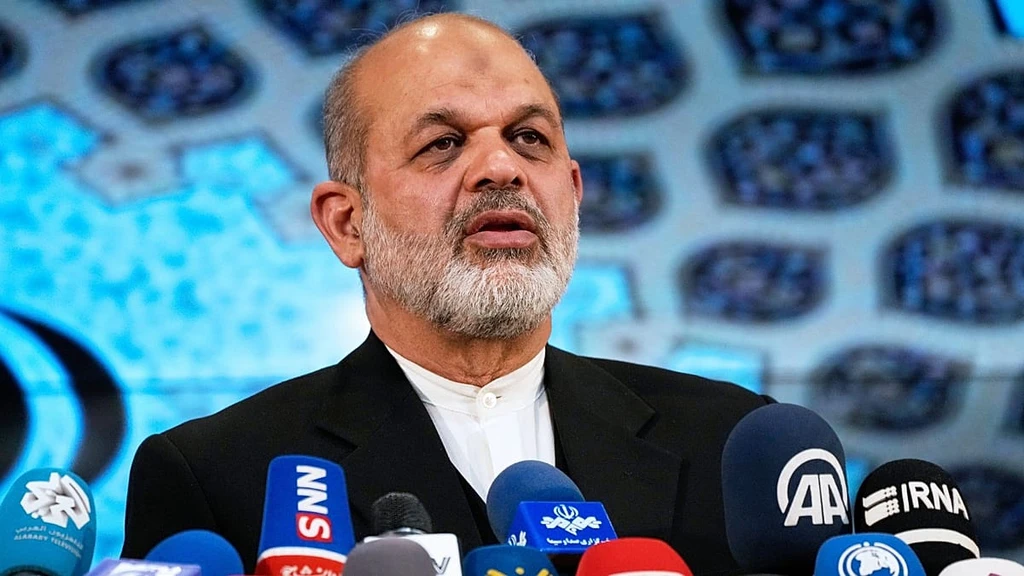
Brigadier General Ahmad Vahidi has emerged as a central figure in Iran’s military and negotiating stance since the war with the US began in February. The Interpol-wanted IRGC deputy commander is now believed to be a key backchannel contact for regional mediators.
Vahidi belongs to a small inner circle communicating with Mojtaba Khamenei, who has not been seen publicly since Israeli and US strikes on his residence on February 28. According to the Institute for the Study of War, Vahidi has consolidated control over both Iran’s military response and its negotiating strategy.
On Thursday, unconfirmed reports said Vahidi met Pakistan’s Interior Minister to receive a message from Washington. Iranian state media denied the reports, calling the photos from 2024.
Born in Shiraz in 1958, Vahidi joined the IRGC in 1980. He was the first commander of the Quds Force in 1988, overseeing Iran’s network of proxies including Hezbollah, Hamas, and Shia militias. He held the post until 1997.
Vahidi is linked to the 1994 AMIA Jewish community centre bombing in Buenos Aires, which killed 85. Argentina’s prosecutor named him as a planner, and he has been on Interpol’s Red Notice list since.
As defence minister under President Mahmoud Ahmadinejad from 2009 to 2013, he focused on domestic missile and drone production. Later, as interior minister under Ebrahim Raisi, he oversaw the security response to the Mahsa Amini protests in 2022.
Politically, Vahidi is a hardline conservative. Iran’s current strategy under his influence includes controlling the Strait of Hormuz and refusing to surrender enriched uranium stockpiles. Diplomatic talks in Islamabad in April failed to produce an agreement.