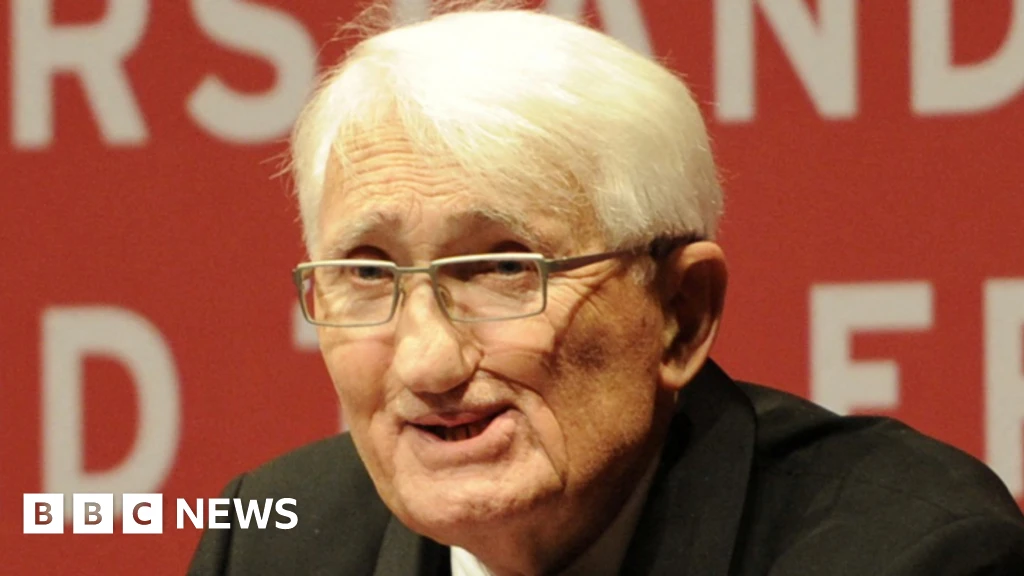
Jürgen Habermas, one of Germany’s most influential philosophers and public intellectuals, has died at 96.
Reuters
Habermas, a founding voice of the Frankfurt School, taught at the University of Frankfurt in the 1960s and supported student protests against West German academia. He challenged capitalism through critical theory, arguing that mass culture erodes rational public debate.
Born in Düsseldorf in 1929, he grew up under Nazi rule, joined the Hitler Youth as a child, but did not serve in WWII. After the war, he earned a doctorate from Marburg and became a leading thinker alongside Max Horkheimer and Theodor Adorno.
His 1981 work, The Theory of Communicative Action, asserted that democratic societies thrive not through power or economics, but through rational dialogue.
In later years, he opposed rapid East German reunification and advocated for a united Europe to prevent nationalist resurgence. A cleft palate, corrected through childhood surgeries, influenced his lifelong focus on language and communication.