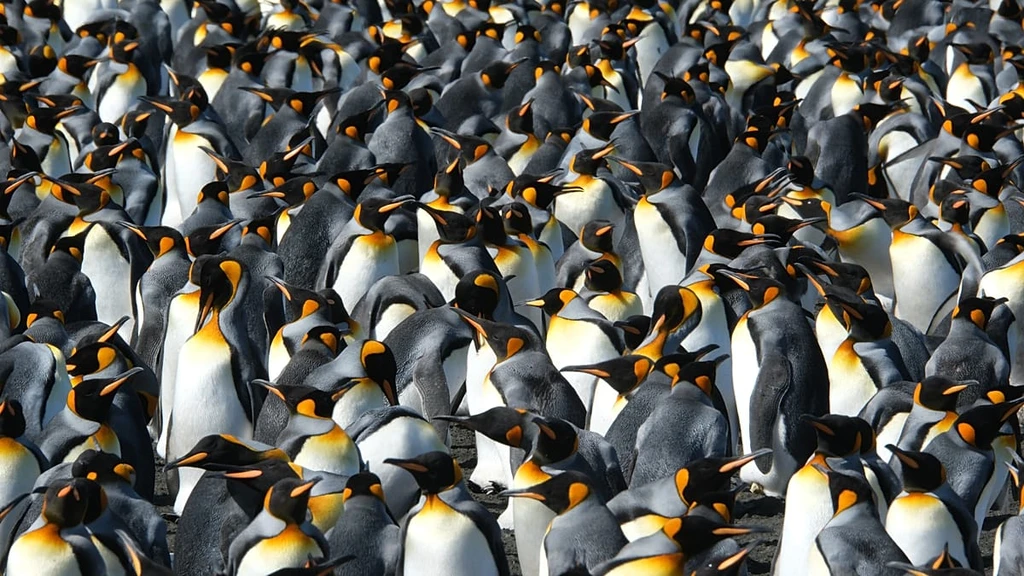
Climate change is altering natural cycles, often with negative consequences for species dependent on synchronized timing. However, a new study reveals king penguins are an exception, experiencing a significant boost from warming trends.
Research tracking 19,000 king penguins on sub-Antarctic islands shows their breeding season now begins 19 days earlier than in 2000. This earlier mating has led to a remarkable 40% increase in breeding success. Scientists are calling this adaptation "quite striking," noting it's unusual in a world where many species, particularly birds, struggle to keep pace with phenological shifts.
Unlike other penguin species threatened by earlier breeding seasons, king penguins possess the flexibility to breed from late October to March. They are leveraging this adaptability, even as ocean temperatures rise and their food web changes. Researchers report king penguins can adjust their foraging behavior effectively, diversifying their prey beyond lanternfish, their primary food source.
While this resilience offers a rare positive outlook in climate change studies, experts caution that this advantage may be temporary. The long-term implications for king penguins and potential competition for resources with other species remain subjects of ongoing observation.