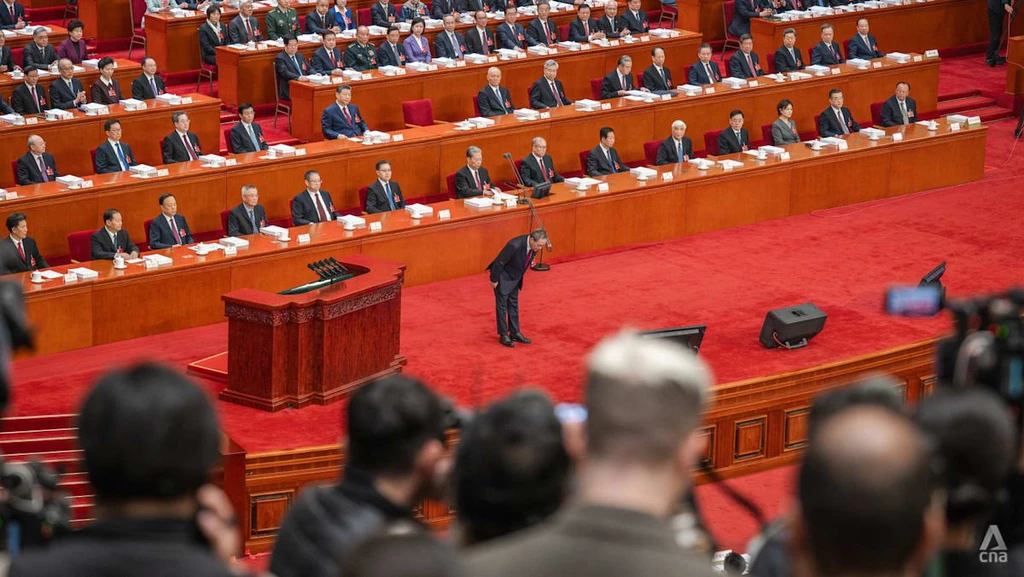
China's most significant political event, the Two Sessions, has commenced, signaling a notable shift in economic strategy. Premier Li Qiang announced an economic growth target of 4.5 to 5 percent for the year, the lowest since 1991. This marks a deliberate move from a "speed-first" approach to "quality-first," aiming for industrial upgrading, green transformation, and risk resolution.
Acknowledging headwinds from weak domestic demand, a struggling property market, and geopolitical risks, Li stated the landscape is "grave and complex." The government is prioritizing household spending with an income growth plan and consumer goods trade-in programs, focusing on EVs and smart products. However, challenges like the property market downturn and job uncertainty persist.
Defense spending saw a 7 percent increase, reaching 1.91 trillion yuan, aligning with broader economic recalibration amid regional tensions and global instability. This steady growth underscores China's commitment to military modernization and reinforcing Communist Party control.
Technology, particularly Artificial Intelligence (AI), remains central to China's growth plans. Beijing will accelerate AI adoption across industries, support open-source AI communities, and invest in strategic sectors like quantum technology and 6G. Large-scale computing centers will be built to power advanced AI systems.