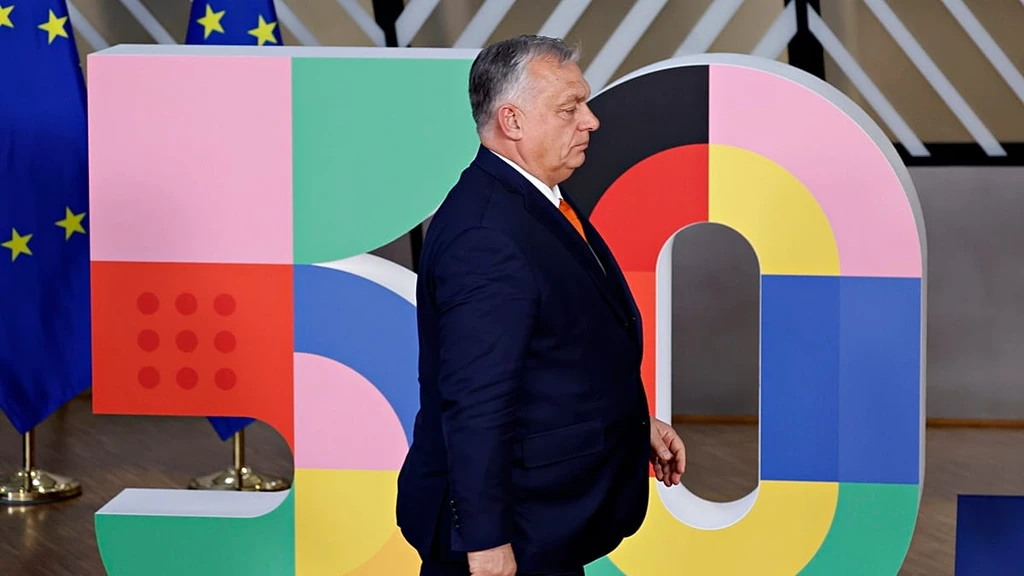
Hungary is set for a major leadership change as Viktor Orbán exits after 16 years of continuous power, following a significant parliamentary election defeat. The country will now be led by Prime Minister Péter Magyar of the Tisza party. This transition is poised to reshape power dynamics within the European Union, where Orbán's government was often characterized by obstruction and frequent use of the veto.
Orbán's tenure was marked by infamously employing the veto power, often described as "transactional" and "blackmail," which frequently frustrated other member states. Recent revelations suggested Orbán's foreign minister briefed his Russian counterpart on EU decisions, escalating concerns among European leaders. The election results were met with enthusiasm from EU officials. European Commission President Ursula von der Leyen stated, "Hungary has returned to the very heart of Europe." Leaders like France's Emmanuel Macron and Spain's Pedro Sánchez also welcomed the shift, anticipating a more united Europe.
Despite the widespread relief, there is cautious optimism regarding Hungary's future direction. Orbán significantly reshaped the Hungarian state, impacting its rule of law and media landscape. Péter Magyar, a conservative who previously belonged to Orbán's Fidesz party, faces the challenge of navigating this complex legacy. Diplomats are divided, with some expecting a "significant shift" towards a more practical approach, while others remain wary due to Magyar's past affiliations.
Magyar has pledged a "constructive position" and a willingness to debate, a stark contrast to Orbán's confrontational style. He indicated Hungary would not revisit Orbán's veto on a €90 billion loan for Ukraine, citing the country's difficult financial situation, a move well-received by the Commission. Hungary's focus is expected to shift to internal reforms and restoring ties with Brussels. Magyar's affiliation with the center-right European People's Party (EPP) offers a strategic advantage in EU negotiations, contrasting with Orbán's far-right, Eurosceptic stance. Analysts suggest Magyar may emulate Poland's Donald Tusk, focusing on rebuilding EU ties and unblocking funds, rather than engaging in disruptive vetoes. Hungary's reduced role in EU obstruction is anticipated as the new government prioritizes domestic issues. The alignment of Slovak Prime Minister Robert Fico, Orbán's former ally, will also be closely watched, though Fico's confrontational tactics differ from Orbán's approach. The EU is considering moving towards qualified majority voting in foreign policy to prevent future blockages, a lesson learned from the Orbán era.