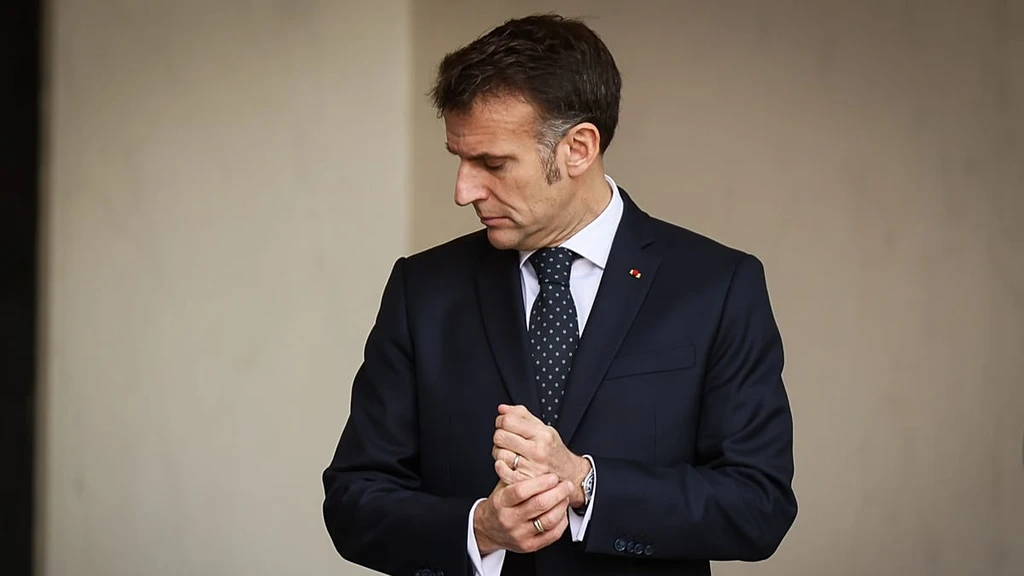
French President Emmanuel Macron is set to unveil France's nuclear deterrence doctrine at the Île Longue submarine base. The address will clarify how French nuclear weapons can protect European allies, a critical move as global security dynamics shift.
The speech comes at a time when European nations are reassessing the reliability of US security guarantees. Macron's address is anticipated to introduce significant developments, emphasizing that France's nuclear offer complements, rather than competes with, NATO.
This speech marks Macron's second major address on nuclear deterrence, following a 2020 proposal for a strategic dialogue with European partners. The renewed focus on France's nuclear role is amplified by Russia's full-scale invasion of Ukraine and persistent doubts about US security commitments.
France, the sole nuclear-armed EU member, possesses fewer than 300 warheads, deemed sufficient to inflict "unacceptable damage." The decision to use these weapons remains solely with the French president, with no intention of allies co-paying for this deterrence. In scenarios where US security guarantees falter, France and the UK would be compelled to enhance their nuclear capabilities to prevent wider proliferation.
The geopolitical landscape for nuclear weapons has dramatically changed, with Russia revising its deterrence policy and China and North Korea expanding their arsenals. The US has also considered resuming nuclear tests, and the UK is set to acquire nuclear-capable fighter jets, restoring an air-delivery capacity.
The choice of the Île Longue base, home to France's four nuclear-armed submarines, underscores the nation's robust nuclear posture in an increasingly volatile world.