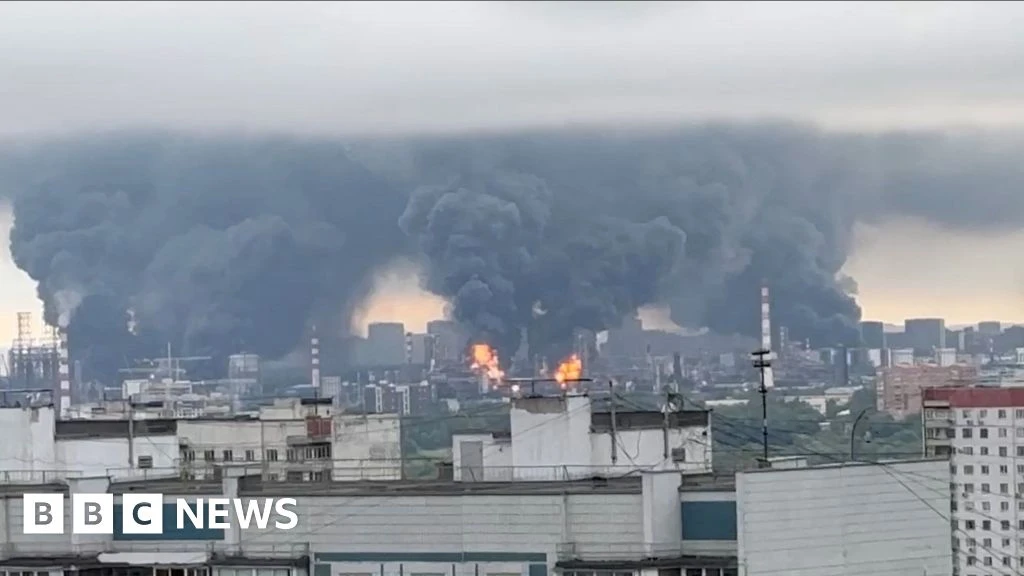
Moscow has sustained its most significant aerial assault since Russia launched its full-scale invasion of Ukraine. Approximately 200 drones targeted the capital and surrounding areas, sending thick smoke columns into the sky and wounding seventeen people in the region.
Russia’s Defense Ministry reported intercepting nearly 1,000 drones and four cruise missiles nationwide within a 24-hour period. Despite these defenses, strikes penetrated airspace to hit critical infrastructure. The Kapotnya oil refinery in southeast Moscow was struck for the third time this month, causing massive explosions that blew storage tank lids into the air and blackened the skyline.
The attacks caused immediate civilian disruption. Debris ignited fires at a nearby shopping center, forcing evacuations of residential high-rises. All four Moscow airports temporarily suspended operations, resulting in over 500 flight cancellations or delays.
President Volodymyr Zelensky described the operation as long-range sanctions against Russian aggression. He stated the strikes were a direct response to recent Russian attacks on Kyiv, including damage to a major religious landmark. Zelensky emphasized that continued warfare would bring destruction to Moscow itself.
Ukrainian Foreign Minister Andriy Sybiha addressed Russian citizens directly, linking the capital's vulnerability to the ongoing war of attrition. While Vladimir Putin hosted Southeast Asian leaders in Kazan without commenting on the assault, Kyiv continues to expand its long-range strike capabilities to bring the conflict's reality closer to the Russian public.