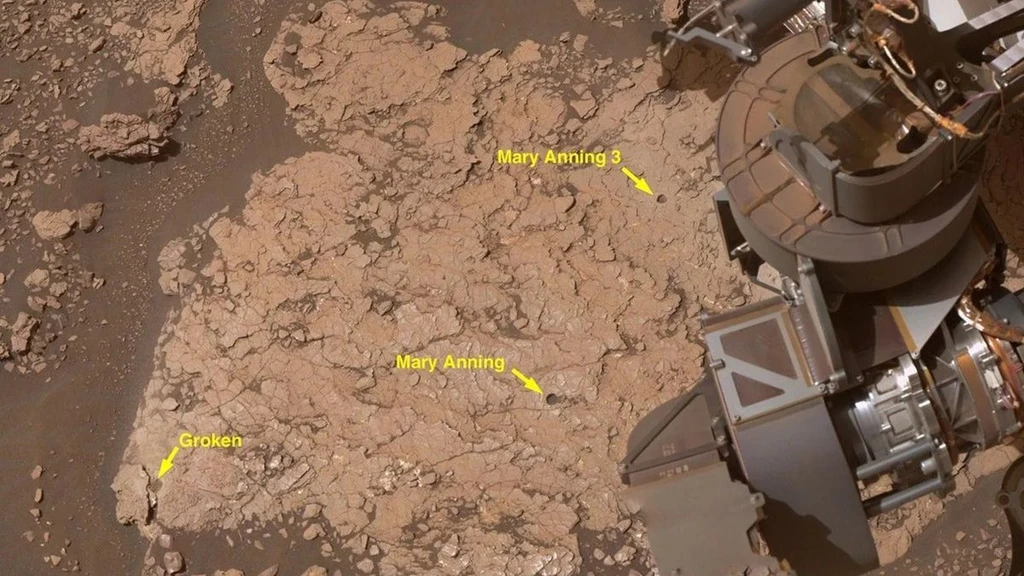
NASA's Curiosity rover has identified an unprecedented collection of organic molecules in a Martian rock, marking the most diverse assortment of life's building blocks ever found on the Red Planet. The discovery includes seven organic molecules previously undetected on Mars.
The rock, nicknamed 'Mary Anning 3', yielded 21 carbon-containing molecules. Among the new findings are nitrogen heterocycles, precursors to RNA and DNA, and benzothiophene, which may have aided in transporting life-friendly chemistry to planets via meteorites. Scientists are investigating whether these molecules originated from biological or geological processes, but the discovery strengthens the theory that ancient Mars could have supported life.
The sample was recovered from an area that once hosted abundant lakes and streams billions of years ago. This ancient aquatic environment, prone to surges and drying, likely concentrated and preserved organic compounds in clay minerals, according to JPL officials.
These findings were analyzed using the Sample Analysis at Mars (SAM) instrument aboard Curiosity. A specialized wet chemistry experiment, using tetramethylammonium hydroxide (TMAH), was employed for the 'Mary Anning 3' sample due to its high potential value. Verification of Martian molecules was achieved by comparing results with the ancient Murchison meteorite, which contains similar organic compounds.