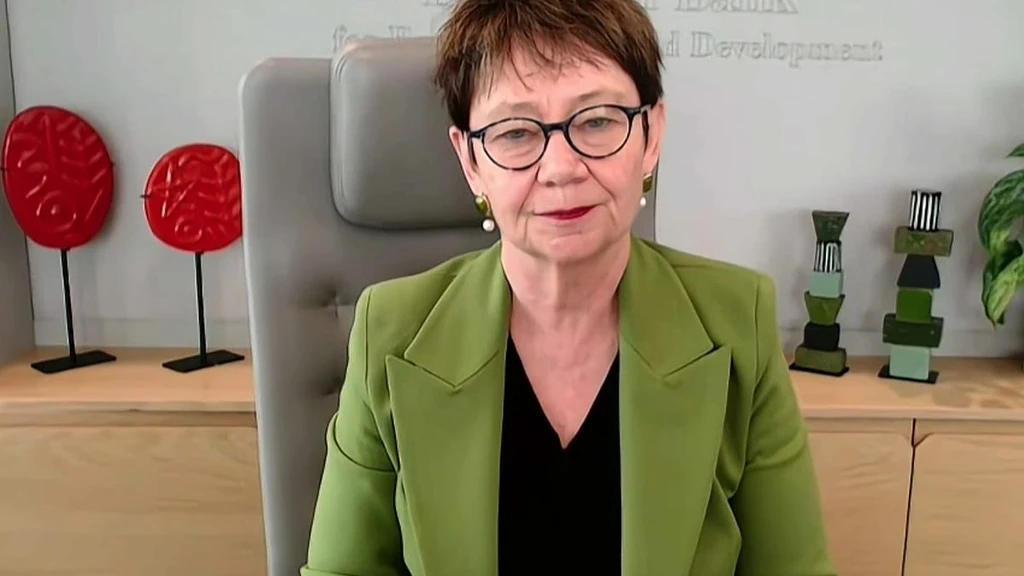
Odile Renaud-Basso, President of the European Bank for Reconstruction and Development (EBRD), has issued a stark warning: a prolonged war in the Middle East could trigger a "much more serious economic impact" on the European Union. Diplomatic efforts between the US and Iran to de-escalate tensions have reportedly faltered.
Renaud-Basso stated that while the current Middle East situation is already impacting growth and inflation in EBRD operating economies, a drawn-out conflict would have "wider and more significant" repercussions. These impacts are directly linked to soaring energy prices. The conflict's effect on the Strait of Hormuz and energy infrastructure has already driven up global oil and gas prices, prompting government interventions like fuel subsidies and tax cuts.
The EBRD projects that if oil prices remain around $100 per barrel, it could dent growth by 0.4% and increase inflation by approximately 1.5% in the bank's operational regions. "This doesn't mean recession, but if the situation worsens, then the impact will be wider and more significant," Renaud-Basso cautioned. She noted that oil prices could climb substantially higher if the Strait of Hormuz remains blocked or if production capacities are further damaged.
Europe faces a critical challenge due to its diminished fiscal space. Renaud-Basso highlighted that European governments have less capacity to counter energy price increases compared to their responses during the Covid-19 pandemic or the 2022 energy crisis.
In response, the EBRD plans to invest €5 billion in 2026 in Middle Eastern countries affected by the conflict's economic fallout. Initial support will target directly impacted economies like Iraq, Jordan, Lebanon, and the West Bank and Gaza, along with neighboring countries such as Egypt, Turkey, and Armenia. The bank is stepping in to support investment as private sector banks reduce exposure, acting as a counter-cyclical institution.
The EBRD is also prepared to support other economies facing broader economic security issues and emerging macroeconomic impacts. Established to rebuild post-Soviet economies, the bank now primarily invests in Central and Eastern Europe, Central Asia, and the Southern and Eastern Mediterranean, supporting market-oriented transitions. It has also become a significant investor in Ukraine, deploying €9.1 billion since Russia's 2022 invasion, with a focus on energy security.
Renaud-Basso also pointed out that the Middle East situation is indirectly affecting Ukraine by raising energy prices, depleting anti-missile stocks, and potentially benefiting Russia from continued fossil fuel sales.