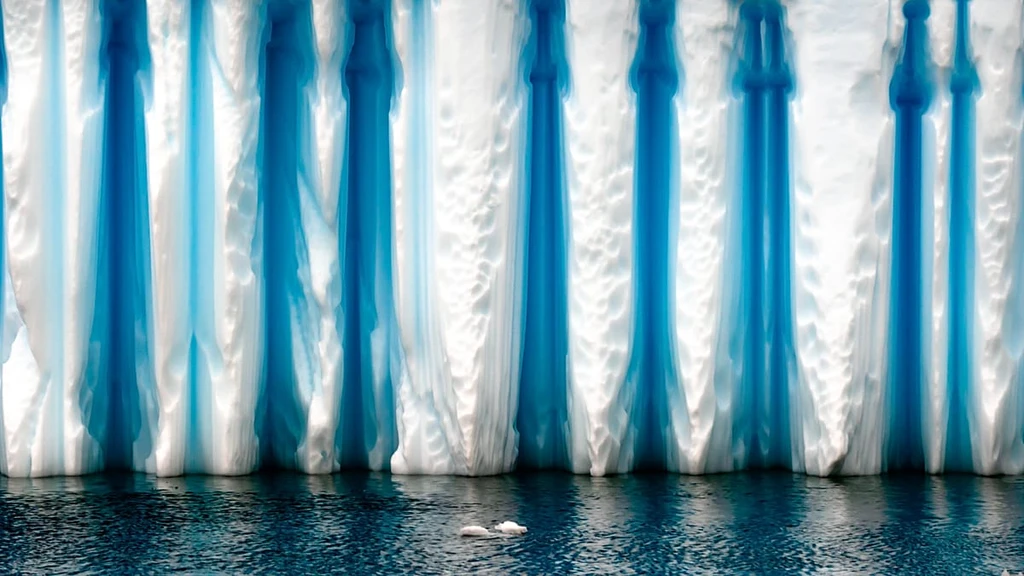
Photographer Jon McCormack is capturing the intricate beauty of Earth's natural systems, from Icelandic ice caves to Kenya's flamingo-pink shores. His work, featured in the new book ‘Patterns: Art of the Natural World’, highlights how these delicate environments are rapidly changing due to climate change and extreme weather.
McCormack emphasizes that natural systems are structured, responsive, and deeply interconnected. He notes that when one system shifts, many others are affected. The past three years have been the hottest on record globally, exceeding the 1.5°C warming threshold. McCormack points out that foundational systems like ice, water, soil, and forests are living structures under significant pressure.
Europe, as the fastest-warming continent, is experiencing dramatic effects, including the near disappearance of Alpine glaciers and the destruction of wetlands. McCormack's photography often focuses on places where these systems become visible as form, such as glacial architecture or algae-colored lakes.
He observes that natural systems struggle with the acceleration and compression of change, rather than gradual adaptation. Glacial environments, in particular, show stark shifts, with ice caves and surface structures destabilizing and vanishing rapidly. Iceland, for example, has lost numerous glaciers, mirroring a continent-wide pattern of retreating ice and extreme weather.
McCormack believes his images can make climate change tangible, fostering a connection that encourages protection. Despite widespread awareness, climate change often ranks below immediate concerns like cost of living. His book aims to showcase Earth not as a backdrop, but as a living, intricate system to which humanity is connected and responsible.