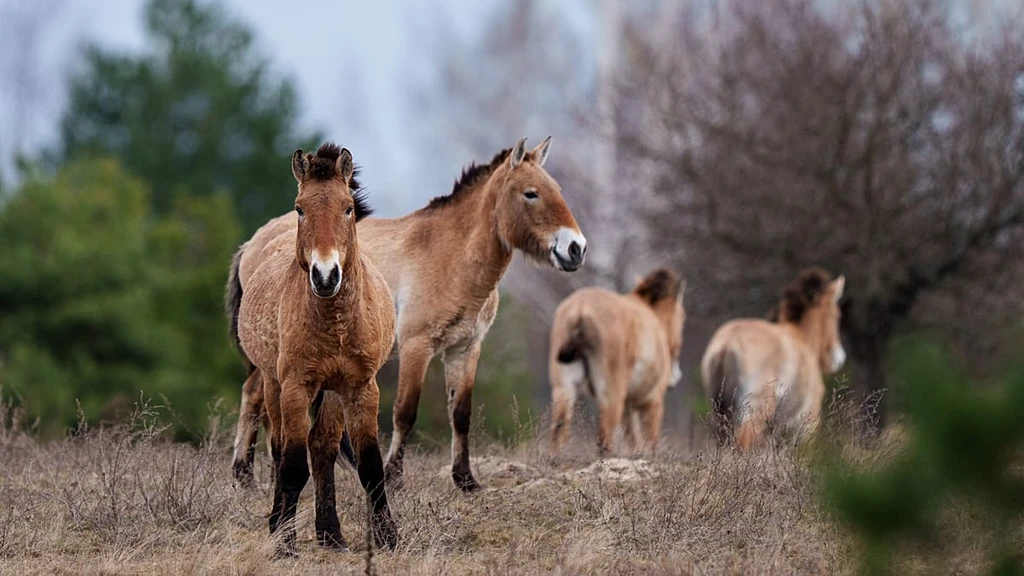
On contaminated land deemed too dangerous for human habitation, Przewalski’s horses, a species once on the brink of extinction, now roam free across the Chernobyl exclusion zone.
Forty years ago, the Chernobyl nuclear power plant explosion contaminated vast areas and displaced tens of thousands. Today, while still unsafe for humans, the zone has become a sanctuary for wildlife.
Wolves prowl the no-man's-land, brown bears have returned after a century, and populations of lynx, moose, and red deer have rebounded. The Przewalski’s horses, native to Mongolia and known as 'takhi', were reintroduced in 1998 as part of a rewilding experiment. They are genetically distinct from domestic horses and have adapted to shelter in abandoned buildings.
Denys Vyshnevskyi, the zone's lead nature scientist, notes that with human activity gone, the area has undergone a 'factory reset,' allowing nature to recover rapidly. Trees now grow through abandoned structures and cemeteries are overgrown.
Despite persistent radiation, scientists observe subtler effects, such as darker frog skin and cataracts in birds in high-radiation areas. However, new threats have emerged. The 2022 invasion saw fighting and fires linked to military activity sweep through the forests, potentially re-suspending radioactive particles. Wartime conditions have also led to increased fallen trees and animal casualties.
Chernobyl remains off-limits for generations, a heavily monitored military corridor marked by barriers and minefields. Yet, for conservationists, it represents a 'wonder' - a testament to nature's resilience and recovery.