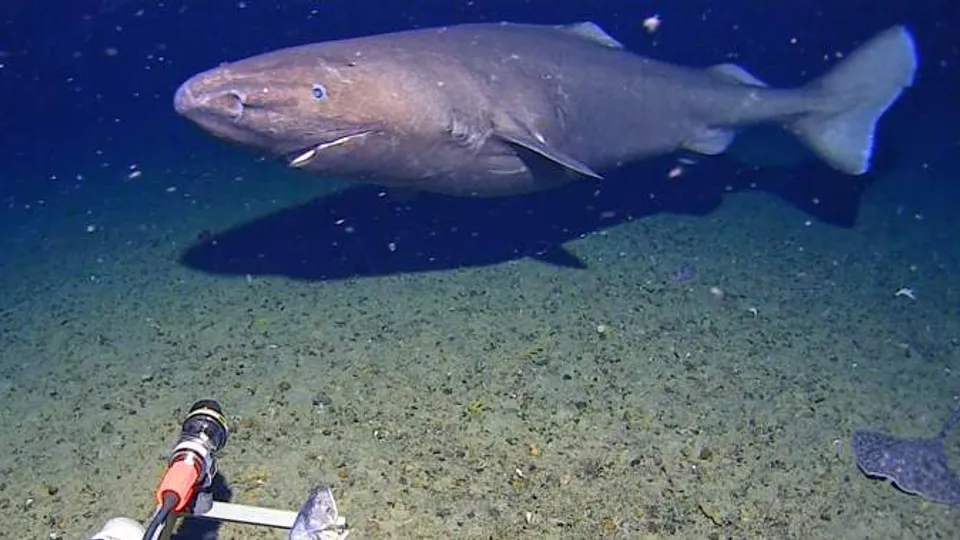
For the first time, a large sleeper shark has been filmed in the frigid waters of Antarctica, challenging long-held scientific beliefs about the species' habitat.
The nearly four-meter-long shark was captured on camera in January 2025 by a research facility operating off the South Shetland Islands near the Antarctic Peninsula. Experts, including Dr. Alan Jamieson of the Deep-Sea Research Centre, expressed surprise, as the prevailing view was that sharks did not inhabit these extreme southern latitudes.

Dr. Jamieson noted that the shark was observed at a depth of 490 meters, an area with slightly warmer water layers. The scarcity of research in the remote Antarctic Ocean means data on shark migration and range is limited. While climate change is a potential factor, it's also possible these slow-moving sleeper sharks have always been present but previously undetected.
Conservation biologist Peter Kyne commented on the significance of the find, highlighting that the confluence of the shark, the camera's location, and the timing resulted in a notable scientific discovery. He added that the shark population in the Antarctic Ocean might be small, contributing to their elusive nature.

Researchers suspect other shark species may also inhabit these depths, feeding on sunken marine life. The limited operational periods of deep-sea cameras, primarily during summer months, mean vast stretches of the year remain unobserved, potentially leading to further unexpected discoveries.