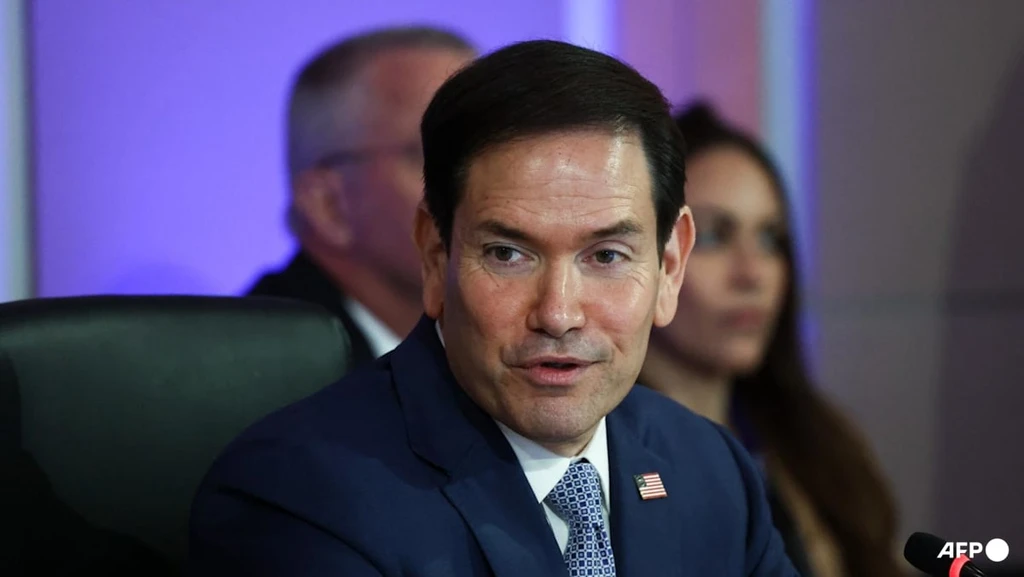
US Secretary of State Marco Rubio told Southeast Asian foreign ministers in Manila on Wednesday that Iranian control of the Strait of Hormuz would set a dangerous precedent with global repercussions.
His comments came as US Central Command said it had begun striking military targets in Iran for the "11th consecutive night" to degrade its ability to threaten commercial shipping.
"If we create a precedent in the Middle East where a nation-state can decide to control an international waterway, charge a toll, and blow up your ships if you don't pay, we have created a very dangerous precedent that will repeat itself in other parts of the world, including this region," Rubio said at the ASEAN gathering.
"At its core, it's very simple. Iran demands the right-which they do not have under any existing legal mechanism-to control the transit of traffic through the Strait of Hormuz," he added.
Rubio stated the United States remains "open" to diplomacy with Iran but accused Tehran of not being "serious" in negotiations.
"If they are serious, we will be too. If they are not, then we will do what is necessary to protect our interests and those of our allies," he said.
The talks occur amid overlapping claims in the South China Sea, another critical global trade route, where the US recently condemned a clash between Chinese and Philippine sailors.
Rubio is scheduled to meet Chinese Foreign Minister Wang Yi and hold talks with fellow Quad members India, Australia, and Japan on the summit's sidelines.