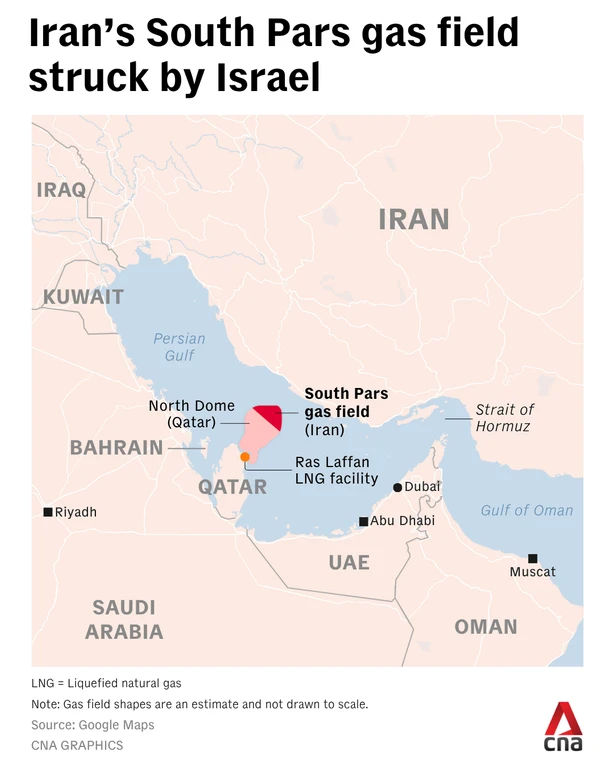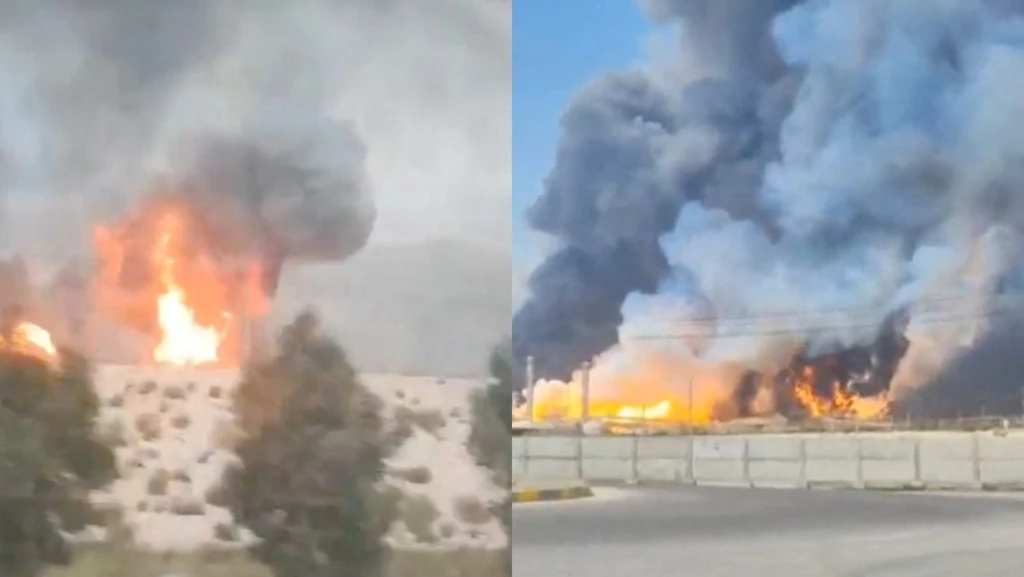
SINGAPORE: An offshore natural gas field has become the latest flashpoint in the conflict involving the United States, Israel and Iran.
Israel struck Iranian gas facilities linked to the South Pars gas field on Wednesday, marking a significant escalation. The attack drew criticism from neighboring Gulf states and led to sharp reactions in global markets.
South Pars is the Iranian side of the world’s largest offshore natural gas field, shared with Qatar. It accounts for 70-75% of Iran's total gas production and is critical to the country's energy supply.
The attack knocked out 17% of Qatar's LNG export capacity, causing an estimated $20 billion in lost annual revenue and threatening supplies to Europe and Asia.
Iran retaliated by attacking Qatar's Ras Laffan facility, raising fears of prolonged supply disruptions. Natural gas prices in Europe surged as much as 35%, while oil jumped 10%.
Analysts warn that continued attacks on Middle East energy infrastructure could have devastating consequences for global prices. Non-energy-producing countries like Singapore would be particularly affected.
The strike was likely aimed at increasing pressure on Tehran, but it prompted a strong Iranian response and raised questions about U.S.-Israel coordination.
U.S. President Donald Trump distanced himself from the attack, warning Israeli Prime Minister Benjamin Netanyahu not to repeat the strike on energy infrastructure.
The episode highlights differing approaches between Washington and Israel, with the U.S. focused on avoiding economic fallout and Israel seeking to weaken Iran's regime.