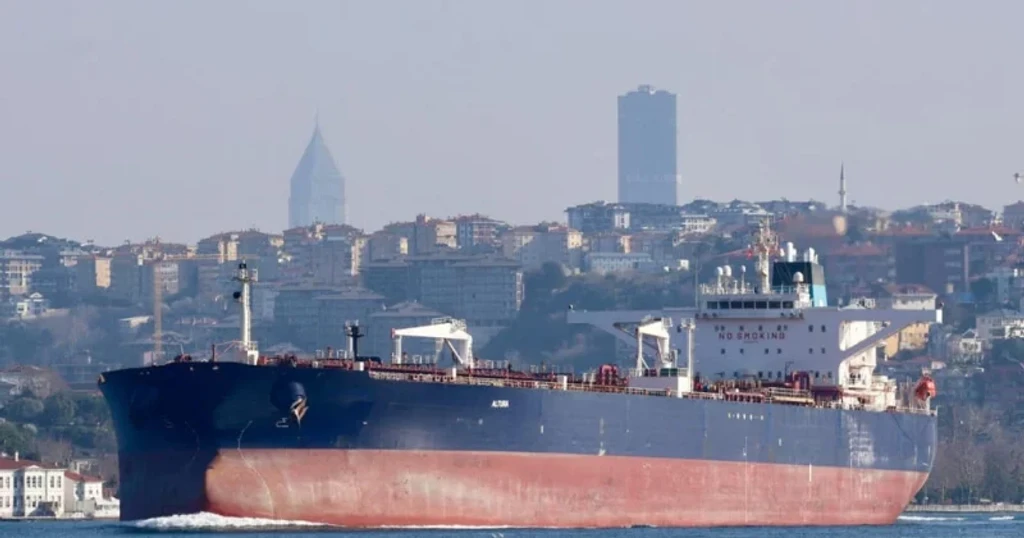
Ukraine has escalated its maritime drone campaign against Russia's sanctioned oil tankers. Three crude-oil tankers were struck by drones off Turkey's Black Sea coast overnight, marking the most aggressive single wave of attacks yet against vessels ferrying Russian crude.
These strikes are part of what Ukrainian officials call "kinetic sanctions," using unmanned maritime drones to stop Russian oil from reaching global markets where traditional economic penalties have struggled.
On March 26, a Ukrainian drone struck the Altura, a Sierra Leone-flagged tanker operated by a Turkish company, about 15 to 24 kilometers from the Bosphorus Strait. The vessel was carrying 140,000 tons of crude oil from Russia's Novorossiysk port. The explosion damaged the engine room and deck, but all 27 crew members escaped unharmed.
The Altura had been sanctioned by the EU, UK, Ukraine, and Switzerland, making it part of Russia's shadow fleet-aging tankers that shuttle crude under obscure ownership to evade price caps and trade restrictions.
Then came the Marquise on April 29, and two more vessels on May 3 near Novorossiysk. Now, three tankers in a single night off Turkey.
War-risk insurance premiums for Black Sea tanker voyages have tripled since late 2025. Russian seaborne crude exports have already shown declines as a result. Ukraine's strategy is using physical risk and financial pressure to achieve what Western sanctions only partially did.
For investors watching energy markets, tanker traffic data through the Turkish Straits and war-risk insurance pricing are key metrics. This overnight attack on three vessels suggests Ukraine's operational capacity is growing.