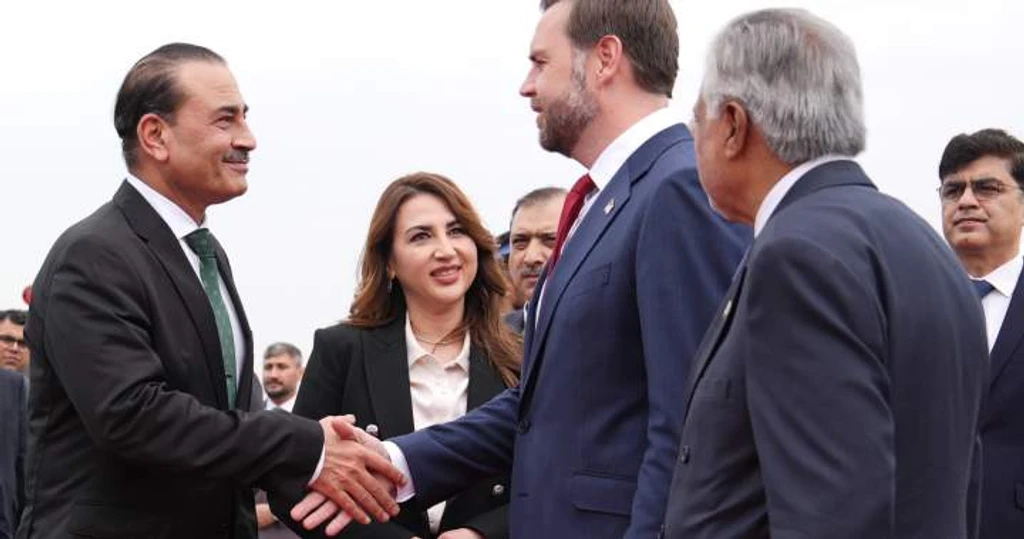
United States and Iran commenced critical negotiations in Pakistan on Saturday, days after a fragile, two-week ceasefire was announced. The war, now in its seventh week, has resulted in thousands of deaths and significant global market disruption.
Iranian state media reported that three-party talks began following the fulfillment of Iranian preconditions, including a reduction in Israeli strikes on southern Lebanon. U.S. and Iranian officials had met separately with Pakistani Prime Minister Shehbaz Sharif prior to the commencement of talks.
The U.S. delegation, led by Vice President JD Vance, and the Iranian delegation, headed by Parliament Speaker Mohammad Bagher Qalibaf, are addressing how to advance the ceasefire. The truce remains threatened by deep disagreements and ongoing Israeli attacks against Hezbollah in Lebanon.
Iran has reiterated its demands, presenting some proposals as "red lines." These include compensation for damage from U.S.-Israeli strikes that initiated the war and the release of Iran's frozen assets.
The conflict has claimed over 3,000 lives in Iran, nearly 2,000 in Lebanon, 23 in Israel, and more than a dozen in Gulf Arab states. The Strait of Hormuz, crucial for global oil and gas exports, has been largely cut off, leading to soaring energy prices.
Israel, however, continues its strikes in Lebanon, stating that the ceasefire does not extend to Hezbollah. This stance has created further tension. Negotiations between Israel and Lebanon are scheduled for Tuesday in Washington.