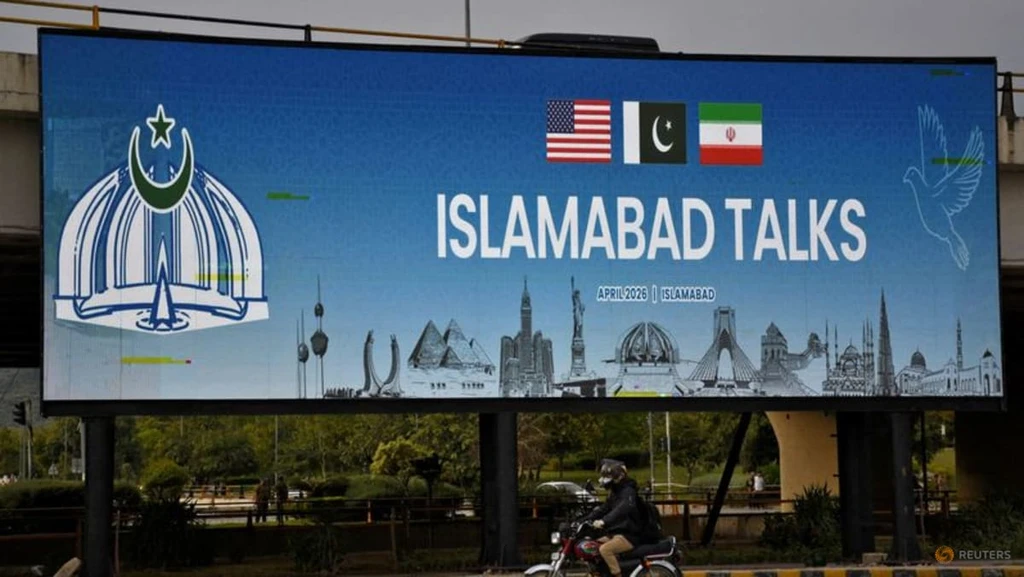
The United States and Iran were set to begin negotiations in Islamabad, Pakistan, aimed at resolving their six-week conflict. However, these critical talks were cast into doubt as Iran indicated that progress hinges on commitments concerning Lebanon and the lifting of economic sanctions.
The US delegation, comprised of Vice President JD Vance, special envoy Steve Witkoff, and Jared Kushner, was en route to the Pakistani capital. Iran's delegation, led by parliamentary Speaker Mohammad Baqer Qalibaf and Foreign Minister Abbas Araqchi, had already arrived.
Speaker Qalibaf stated that Iran expected Washington to unblock its assets and agree to a ceasefire in Lebanon, where conflict between Iran-backed Hezbollah and Israel has resulted in significant casualties. He emphasized that negotiations would not commence until these preconditions were met. The US has maintained that the Lebanon campaign is separate from the broader Iran-US ceasefire.
President Donald Trump commented on social media, suggesting Iran's only leverage was its disruption of international waterways and that its survival was contingent on reaching a deal. Vice President Vance expressed optimism for a positive outcome but warned against attempts to "play" the negotiating team.
Islamabad was under heavy security for the high-stakes discussions. President Trump had previously announced a two-week ceasefire, halting US and Israeli airstrikes, but this has not resolved Iran's blockade of the Strait of Hormuz or the conflict in Lebanon.
Amidst conflicting reports, Israeli and Lebanese officials are scheduled to hold separate talks in Washington regarding the situation in Lebanon. While Lebanese officials aim to discuss a ceasefire and bilateral talks, Israel's embassy indicated these would be formal peace negotiations without addressing a ceasefire with Hezbollah.
Fighting persists in southern Lebanon, with Israeli strikes causing casualties among Lebanese state security forces. Hezbollah has retaliated with rocket fire into northern Israel.
Tehran's agenda also includes demands for the removal of crippling sanctions and recognition of its authority over the Strait of Hormuz. Disruption to global energy supplies has already impacted inflation and the global economy.
New Supreme Leader Ayatollah Mojtaba Khamenei reiterated Iran's stance, vowing to hold aggressors accountable for wartime damages. Despite President Trump's declaration of victory, Iran retains significant military capabilities, including missiles, drones, and enriched uranium.