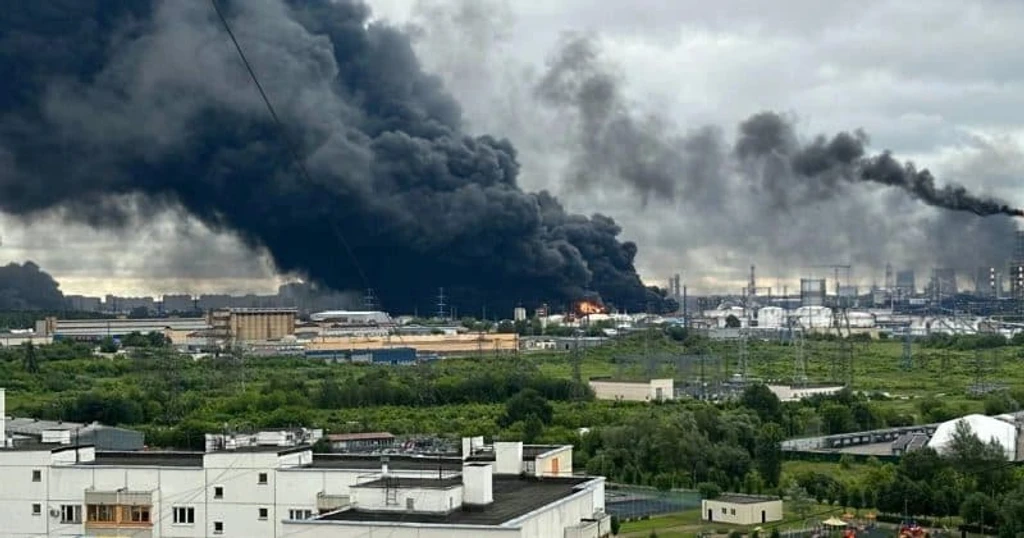
Ukraine launched approximately 60 long-range drones at the Kapotnya oil refinery in Moscow on June 16. The attack ignited fires that disabled more than half the facility’s production capacity and forced flight disruptions at all four of the capital’s airports.
Operated by Gazprom Neft, Kapotnya is the primary fuel supplier for the Moscow region. The strike damaged a critical refining unit responsible for 53% of total output, halting operations at infrastructure essential to millions of residents. This marks the second successful attack on the same facility within seven days.
Moscow Mayor Sergei Sobyanin confirmed structural damage but reported no casualties. Ukrainian President Volodymyr Zelensky characterized the 500-kilometer strike as a proportional response, citing it as evidence of advancing unmanned warfare capabilities.
The operation underscores a strategic shift toward symmetric costs in the conflict. While Russia has historically targeted Ukrainian power grids, Kyiv is now systematically degrading Russian refining assets to create domestic economic pressure. The repeated success of these deep strikes suggests Ukrainian drone tactics are currently outpacing Moscow’s air defense adaptations.
For global energy markets, sustained degradation of Russian refining capacity threatens domestic fuel supplies in one of the world's largest oil-producing nations. With a proven 500-kilometer range, Ukrainian forces can now target pipelines and storage depots previously considered safe from front-line hostilities.