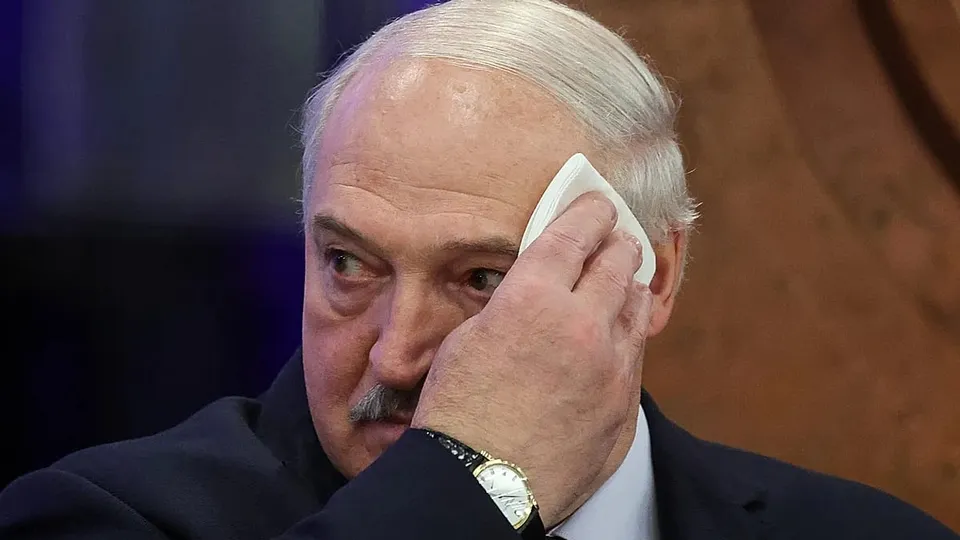
Ukraine has imposed sanctions on Belarus President Aliaksandr Lukashenka, with President Volodymyr Zelenskyy announcing Kyiv will "significantly intensify countermeasures against all forms of his assistance in the killing of Ukrainians." The new measures reflect Lukashenka's deeper involvement in Russia's war, including the deployment of drone control systems on Belarusian territory that have increased Russia's strike capabilities against Ukraine's northern regions. Zelenskyy stated that without Belarus's assistance, Russia would not have been able to conduct certain attacks on energy facilities and railways.
Belarusian opposition leader Sviatlana Tsikhanouskaya praised the sanctions as "principled and timely," highlighting Lukashenka's active support for Russia's war through territory, infrastructure, military production, and missile and drone systems. She described Lukashenka as a dictator who has turned Belarus into a military platform for Russian aggression and warned that complicity has consequences.
According to Ukrainian intelligence, over 3,000 Belarusian enterprises are supplying Russia with critical machinery and components for missile production. Infrastructure is also being developed in Belarus for intermediate-range missiles, posing a threat not only to Ukraine but to all of Europe. Tsikhanouskaya noted that Ukraine no longer views Lukashenka as a legitimate president but as a threat, signaling a shift in policy toward democratic forces in Belarus.
Lukashenka has relied heavily on Russian subsidies for over 30 years and allowed Russia to use Belarusian territory for its invasion in February 2022. While Belarus has not fully committed its own troops, the regime provides territory, logistics, and industrial support for Russian forces. Tsikhanouskaya warned that Russia may continue to pressure Minsk, but direct Belarusian military involvement is unlikely due to widespread opposition within Belarus and potential instability for Lukashenka's regime.
Belarus is also being used for hybrid attacks, including migration pressure on EU borders, intelligence operations, disinformation, and airspace provocations. Tsikhanouskaya emphasized the distinction between the Lukashenka regime and the Belarusian people, a distinction Ukraine's sanctions acknowledge.