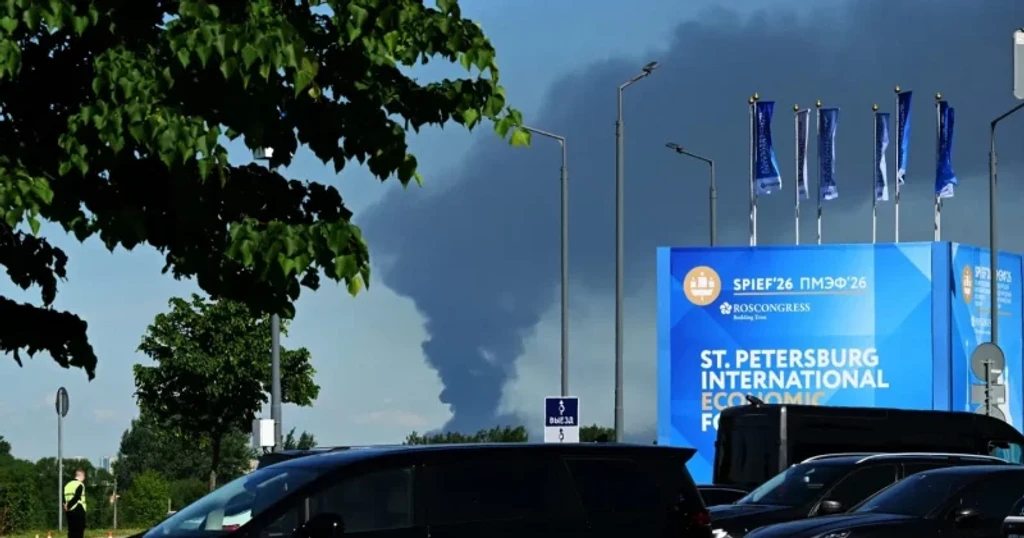
Ukraine launched a massive drone strike against targets in and around St. Petersburg this week, traveling more than 620 miles from Ukrainian territory. The barrage hit the Petersburg Oil Terminal, a major Baltic fuel export hub, along with a naval arsenal, a base in Kronstadt, and oil depots in the Krasnodar region.
Russia claimed it intercepted over 140 drones in a single wave. While civilian injuries were minor, the damage to critical energy infrastructure could have lasting economic consequences.
The timing was deliberate. The strikes began June 2-3, coinciding with the St. Petersburg International Economic Forum, Russia's answer to Davos, and came just days after President Vladimir Putin rejected peace talks proposed by Ukrainian President Volodymyr Zelenskyy.
This operation demonstrates a significant leap in Kyiv's drone capability, putting every major Russian city within reach of Ukrainian retaliation. The complex logistics suggest planning was underway long before Putin's rejection, which gave Kyiv political cover to escalate.
Markets are now watching for a new baseline. If Ukraine can repeatedly strike Russian energy export infrastructure, expect upward pressure on oil prices. The crypto market response has been muted so far, but traders should monitor sustained disruption to Russian energy exports and any escalatory response from Moscow.