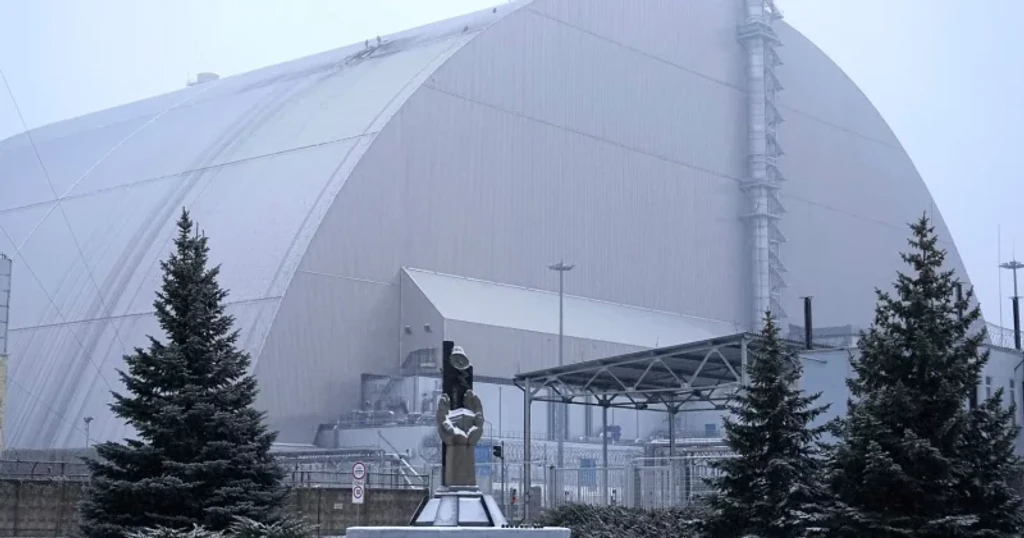
A Russian Shahed drone struck a building at the Centralized Spent Nuclear Fuel Storage Facility near the decommissioned Chornobyl Nuclear Power Plant on June 7, 2026. Ukrainian President Volodymyr Zelenskyy called the attack “extremely vile,” framing it as part of an escalating pattern of deliberate strikes on the country’s nuclear infrastructure.
The early-morning strike damaged a fuel-reception building but caused no casualties and no elevation in radiation levels, according to Ukrainian officials. First responders extinguished the fire without reported injuries.
This is the second confirmed drone strike on Chornobyl since February 14, 2025, when a drone hit the New Safe Confinement structure, the massive arch built to contain radioactive remnants of the 1986 disaster.
The Chornobyl facility, while decommissioned, still houses significant quantities of spent nuclear fuel-intensely radioactive material requiring careful containment, cooling, and monitoring. Damaging the buildings designed to handle that material introduces risks extending well beyond Ukraine’s borders.
Ukrainian Foreign Minister Andrii Sybiha called for worldwide condemnation, characterizing Russia’s actions as a form of nuclear blackmail. Since Russia’s full-scale invasion began in February 2022, nuclear safety has been a persistent concern. The International Atomic Energy Agency continues to monitor risks near critical nuclear infrastructure.
Russian forces occupied the Chornobyl site in the early days of the invasion before withdrawing in late March 2022. The Zaporizhzhia Nuclear Power Plant, Europe’s largest, has been under Russian military occupation since March 2022. Zelenskyy highlighted what he described as a growing trend of deliberate attacks on Ukrainian nuclear facilities, noting an increase in Russia’s “brazenness.”