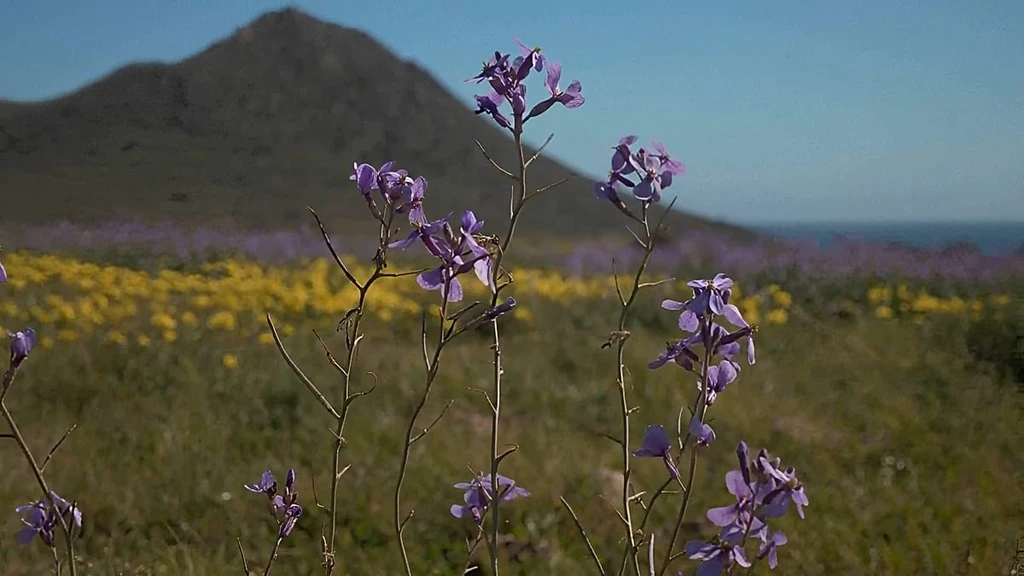
Southern Spain's typically arid Almería province is experiencing an unexpected spring bloom. Record winter rainfall, significantly above the long-term average, has triggered dormant seeds to burst into vibrant color, carpeting the landscape in yellows, whites, and violets.
Local guides and botanists note the dramatic transformation, with areas usually resembling a dry, western film set now alive with wildflowers. Botanist Esther Giménez highlights this is excellent news for biodiversity, providing a crucial food source for invertebrates and subsequently, vertebrates. She refers to it as 'a celebration for the bugs.'
However, the increased vegetation also presents potential challenges. If spring remains dry, the abundant flora could turn into dry pasture, increasing wildfire risk. Giménez also cautions about the invasive Oxalis pes-caprae, or Bermuda buttercup, which is dominating some areas, potentially harming native species. She advocates for responsible, sustainable tourism to appreciate the natural beauty without disturbing the delicate ecosystem balance.