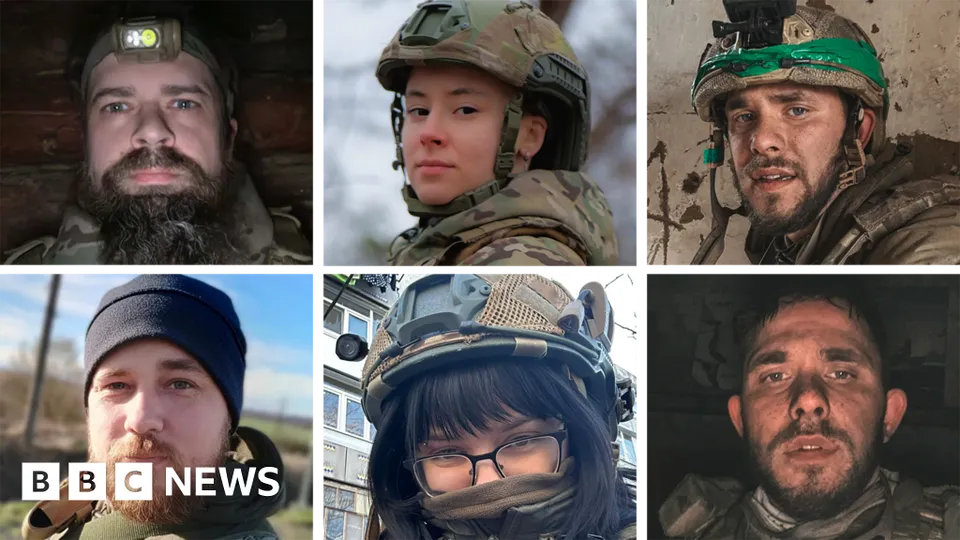
The full-scale Russian invasion of Ukraine on February 24, 2022, rapidly transformed tens of thousands of civilians into soldiers. Many who had never handled a weapon were compelled to take up arms. Over four years of grinding conflict, thousands more have been conscripted, with service being open-ended for men aged 25-65 and contractual for women.
Nine Ukrainian soldiers, speaking from various frontlines and rehabilitation centers, reveal the profound personal toll of war. They detail the shift from their former civilian lives to their current roles, and the indelible impact the conflict has had on their identities and values.
Olena, 26, a former nightclub administrator, now serves as a pilot. She reflects, "My 'past' life was filled with a constant chase... Now, everything is simpler: what matters is that my brothers-in-arms are alive." The silence after news of losses is the hardest, but her family's hope fuels her resolve. "My place is here as long as the enemy is in my house."
Oleh, 37, a publishing graduate and former NGO worker, initially froze in fear. "I am not a military man, I have never seen myself like that," he admits. Now a soldier, he finds meaning in "helping not with words but with deeds." He acknowledges, "You can't save everyone. But even your unsuccessful attempts will matter."
Anastasiia, 19, who worked as a barista before being fascinated by drones, now operates FPV systems. She notes the challenge of being a woman in the armed forces, constantly needing to prove her worth. "Before, I didn't have a clear concept of values in this life due to my age. Now, I feel completely different."
Roman, 42, a former top bio-engineer specializing in facial reconstruction, now operates drones and provides medical aid. He lives in the present: "I try not to think about the future - I live here and now." He anticipates a post-war focus on reconstruction surgery.
Viktor, 28, reflects on his transformation. "I look at these photos and it's like a different person, but at the same time I'm still me - just someone who didn't know what was ahead." He notes that their eyes convey the unspeakable experiences.
Serhii, 42, a civilian with a government job, endured over two years as a prisoner of war after being captured in Mariupol. Captivity was his most harrowing experience, marked by a "profound reassessment of my values." He now focuses on rehabilitation with his family.
Kyrylo, 35, who had a wife, children, and a home, states, "The war took it all away." He found returning to civilian life difficult, experiencing a sense of anonymity after his service. "While you're fighting, you're something, someone. As soon as you stop - then that's it, you're nobody."
These accounts underscore the profound personal sacrifices and the dramatic reshaping of lives brought about by the ongoing war in Ukraine.