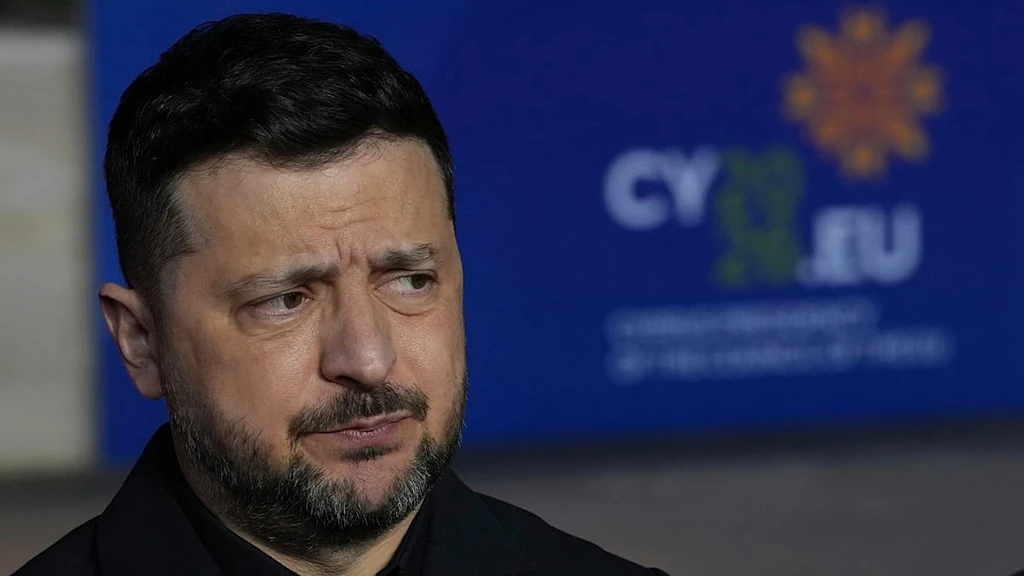
EU leaders met in Cyprus, approving a crucial €90 billion loan for Ukraine after Hungary lifted its veto. Outgoing Hungarian Prime Minister Viktor Orbán's departure cleared the path for this and new sanctions against Russia.
Ukrainian President Volodymyr Zelenskyy attended the summit, urging the opening of accession "clusters" for Ukraine and stating Kyiv meets the necessary conditions. He rejected any "symbolic" pre-accession, emphasizing the real human cost of the ongoing conflict. Zelenskyy requested an acceleration of full EU membership with a clear start date.
Estonian Prime Minister Kristen Michal affirmed Ukraine's future in Europe, stating "The question is only when, not if."
The summit also addressed the escalating Middle East conflict and its impact on energy markets, as well as discussions on the EU's seven-year budget. Leaders reviewed options to mitigate the effects of the Iran conflict on energy prices but made no immediate decisions.
Separately, the EU agreed on a new package of sanctions against Russia, including measures targeting vessels linked to its "shadow fleet," regional banks, and crypto platforms. A proposed ban on maritime services for Russian oil tankers remains on hold pending G7 agreement. These sanctions follow the lifting of Hungary's and Slovakia's vetoes related to the dispute over the Druzhba oil pipeline.