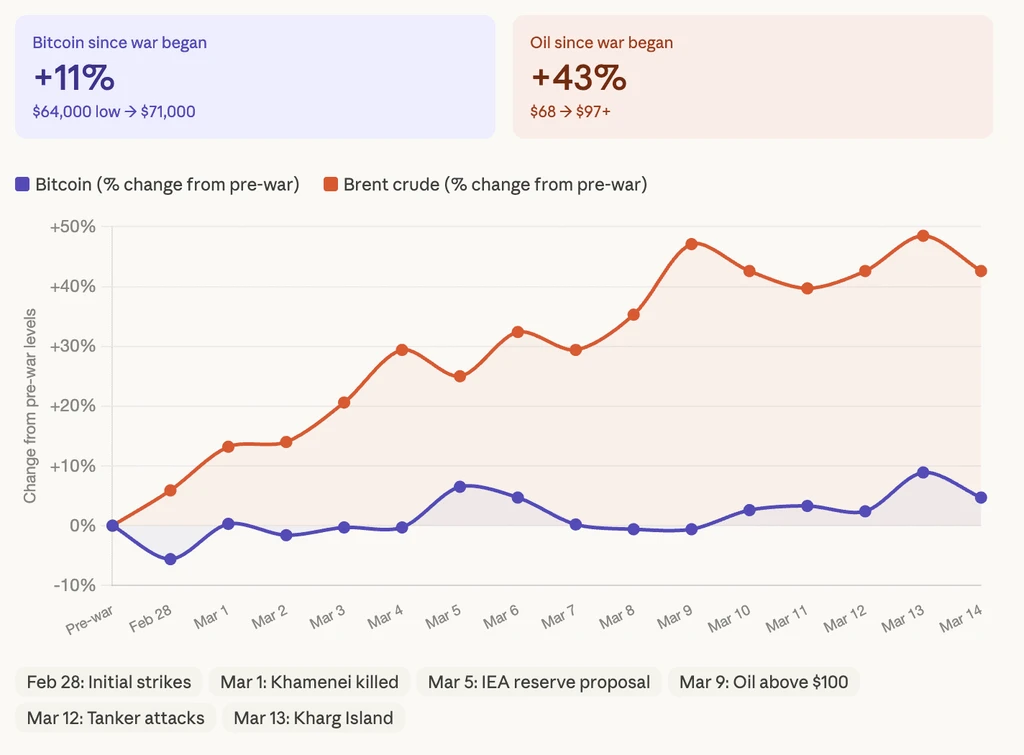
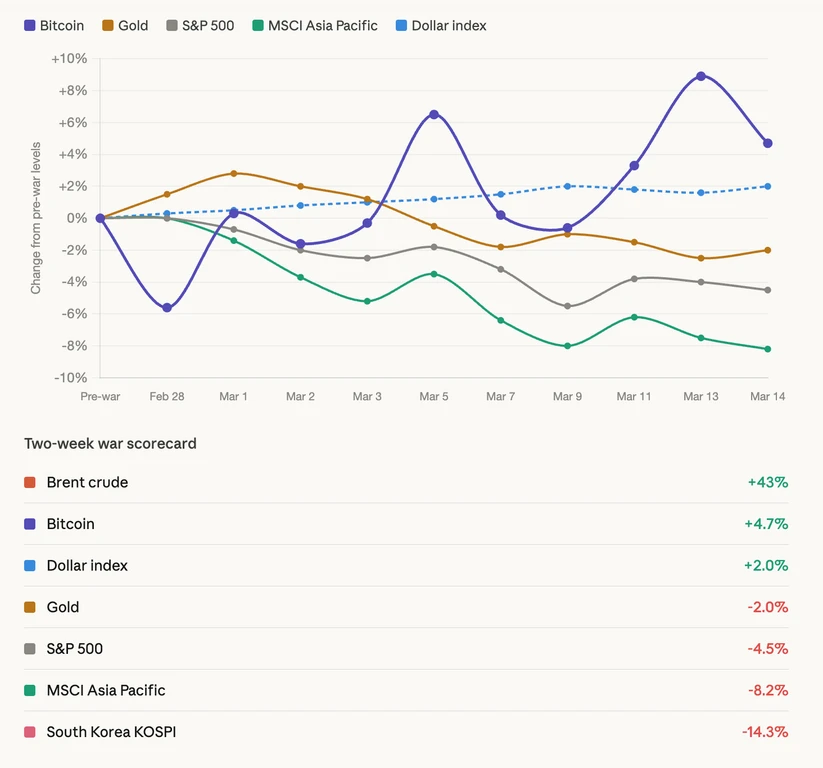
Bitcoin was the first asset to react when U.S. and Israeli strikes began on Iran, dropping 8.5% on the first day. Two weeks later, it has surged past $70,596, outperforming gold, the S&P 500, and Asian equities.
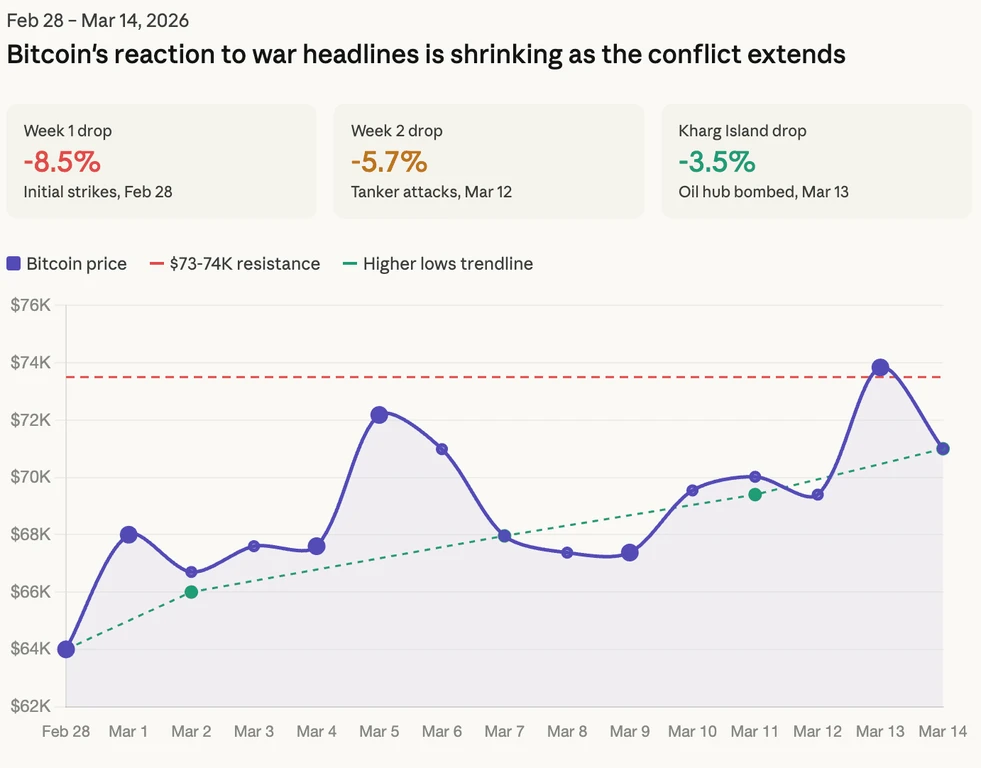
Each escalation brought a new sell-off-but each time, buyers stepped in at higher levels: $64,000 on Feb. 28, $66,000 on March 2, $68,000 on March 7, $69,400 on March 12, and $70,596 after Kharg Island strikes.
This pattern of rising lows suggests growing market confidence. The $73,000-$74,000 range has now resisted four attempts, compressing volatility. A breakout could trigger a surge, or a major escalation may break the trend.
Oil and the dollar are the only assets doing better-both directly benefiting from the conflict.
Despite earlier crashes in February that erased $800 billion in value, bitcoin has since absorbed shocks faster than any other market, acting as a 24/7 liquidity pool.
Meanwhile, Strategy (MSTR), led by Executive Chairman Michael Saylor, continues buying aggressively, holding over 738,000 BTC and aiming for one million by year-end.