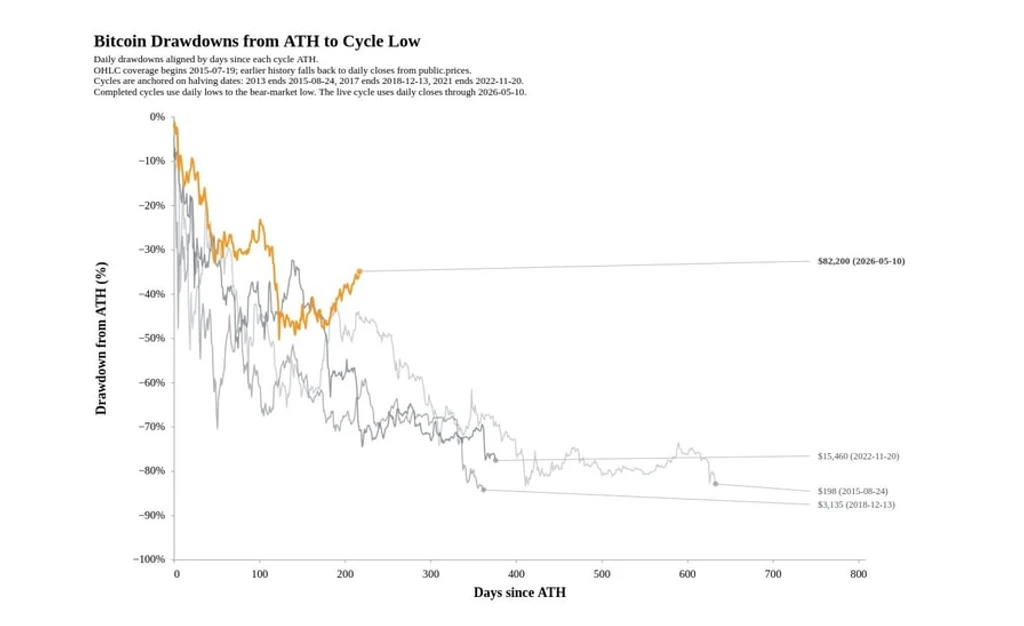
Bitcoin has fallen 36% from its all-time high near $126,000, but one analyst says the current bear cycle has 'materially decoupled' from previous downturns, thanks to a surge in ETF inflows and corporate accumulation.
Pierre Rochard, CEO of Bitcoin Bond Company, compared Bitcoin's drawdowns across multiple cycles. The 2013-2015 crash erased 85% of value, the 2017-2018 decline hit 77%, and the 2021-2022 bear market wiped out nearly 77%. By contrast, the current dip-which took BTC to around $60,000-represents a 52% decline.
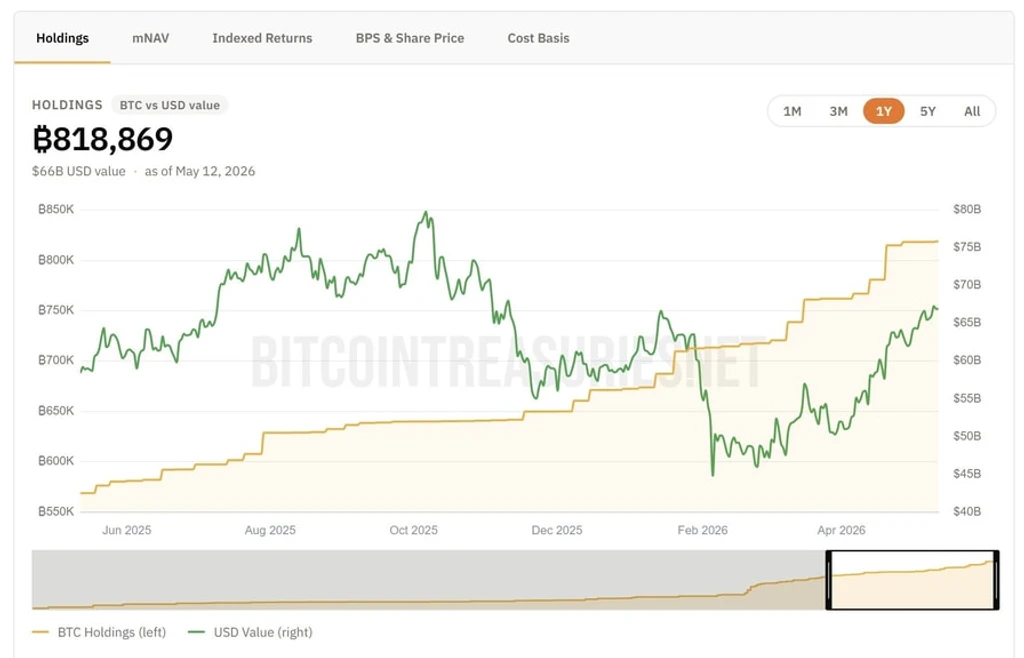
Rochard credits U.S.-listed spot Bitcoin ETFs with bringing consistent demand that didn't exist in prior cycles. Since launch, these products have drawn cumulative net inflows of over $59 billion, including $4.5 billion since March. Corporate treasury buying has also accelerated. Strategy, formerly MicroStrategy, now holds 818,869 BTC, up from 640,031 BTC in October 2025. The firm's average purchase price stands at $75,543 per coin.
MN Capital founder Michaël van de Poppe agrees the landscape has shifted. He points to record Nasdaq highs, the upcoming CLARITY Act vote, discussions around a U.S. strategic Bitcoin reserve, and a new Federal Reserve chair as factors making this cycle distinct.
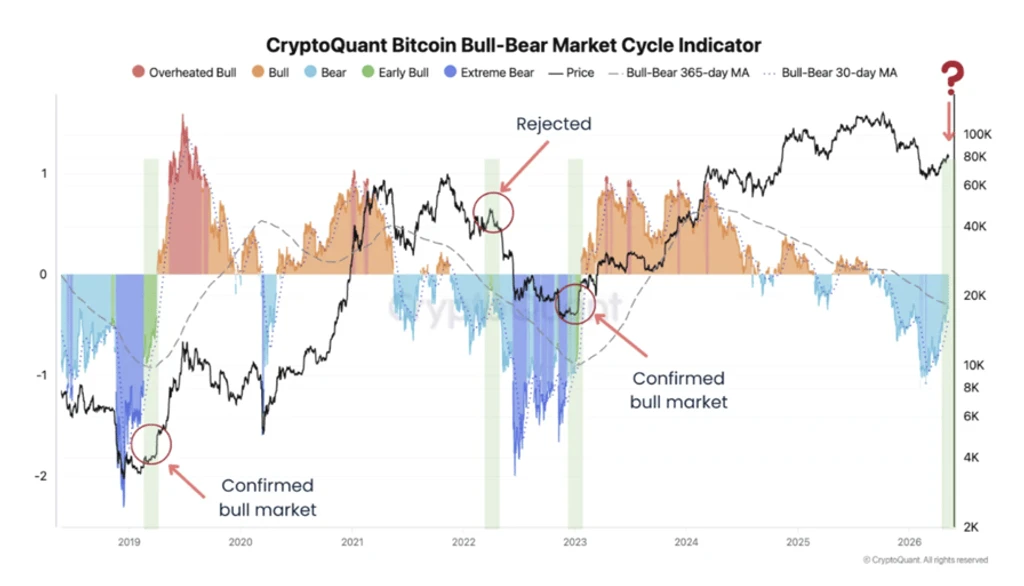
Meanwhile, CryptoQuant's Bull-Bear Market Cycle indicator just flashed its first 'early bull' signal since March 2023. Analyst MorenoDV notes similar signals preceded rallies of 1,280% in 2019 and 461% in early 2023, though he warns that other metrics show signs of exhaustion.
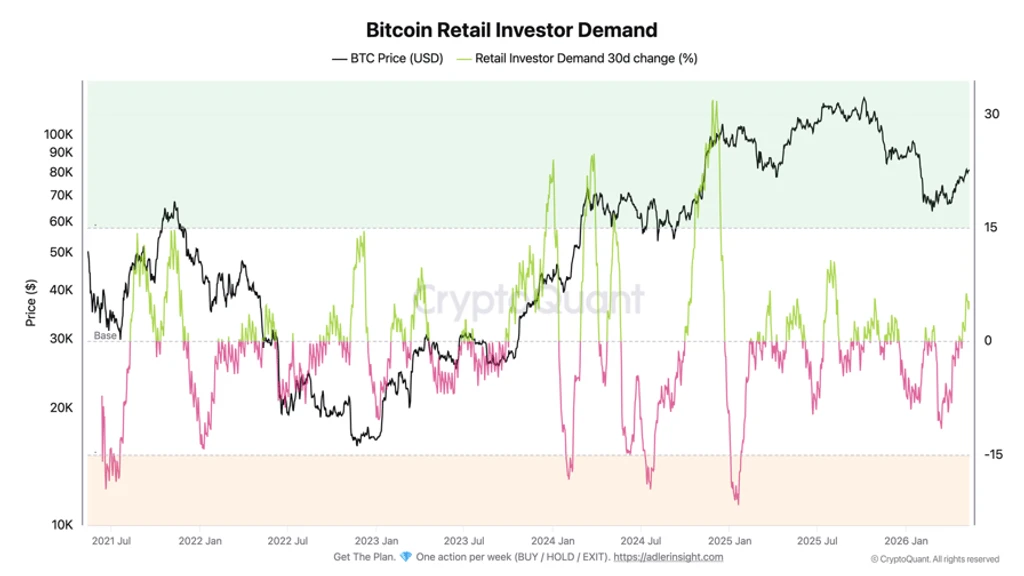
On the retail side, demand is recovering. A 30-day measure of transaction volume from small wallets-those holding between $0 and $10,000-fell to -8.2% on April 5 but rebounded to 6.31% by May 6 and stood near 4.38% as Bitcoin traded at $80,625. However, total retail transfer volume remains below February peaks.