
Bitcoin's price action has remained relatively stable over the weekend, amidst geopolitical tensions that complicate market trajectory predictions. However, the underlying technical and on-chain indicators suggest the bear market persists, leaving Bitcoin vulnerable to further downside volatility.
On-chain analyst Boris highlights rising long-term holder (LTH) active supply as a key indicator. Historically, increased LTH activity precedes significant price movements, often involving strategic distribution of assets in preparation for market shifts. As demand wanes, this distribution can transition into a sideways market structure. Once this distribution phase concludes and new positions are established, Bitcoin has historically entered downward trends.
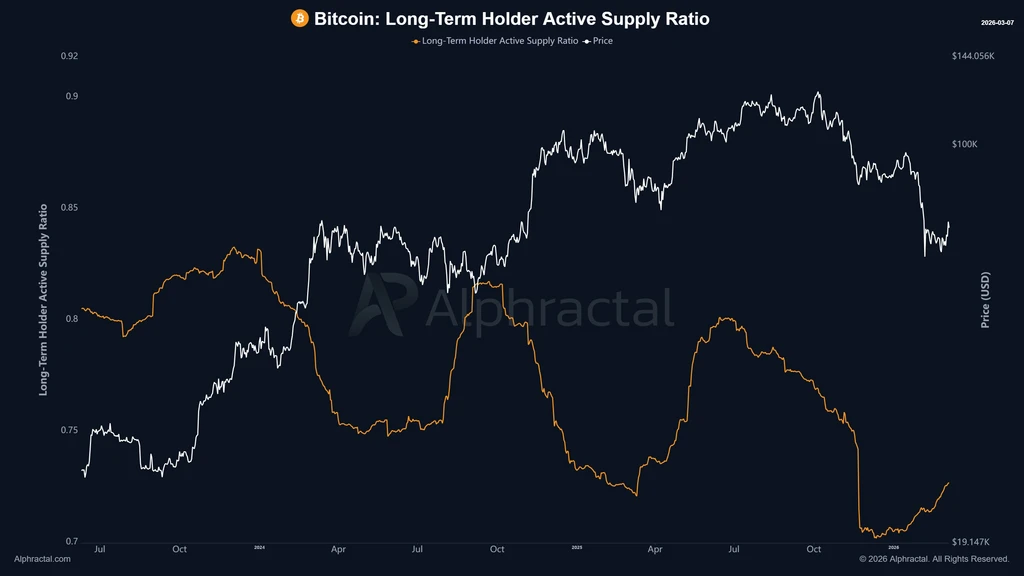
Since the current rise in LTH activity began, Bitcoin's price has already seen a significant drop from approximately $95,000 to $60,000. The continued upward trend in LTH supply indicates that further price declines are a strong possibility. Boris suggests that any upward price movements in the near future might be temporary, acting as a "liquidity illusion" within a broader distribution phase.
While the $60,000-$62,000 range appears to be a support zone, current market structure indicates it may serve as a liquidity generation zone for trading orders. Based on this data, downward price movements are considered the more probable scenario for Bitcoin by the end of the year.
As of this report, Bitcoin is trading around $67,628, showing a 1% decline in the last 24 hours.