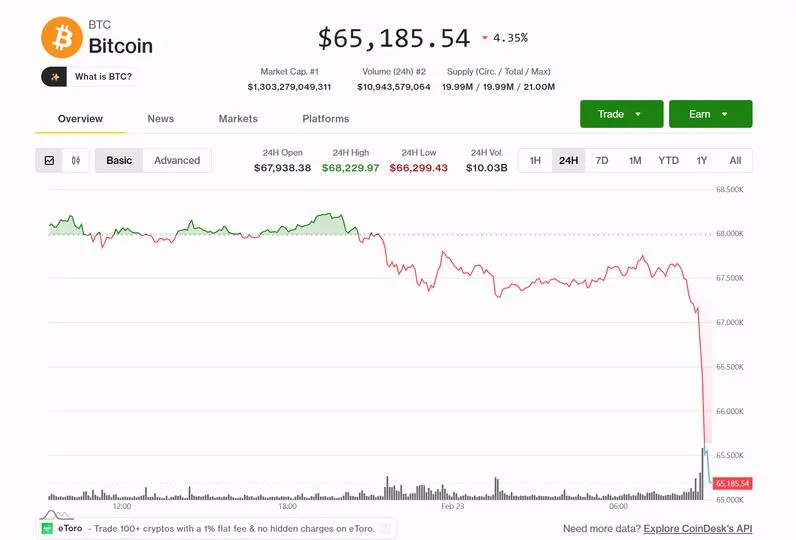
Bitcoin's price has plunged 5% to $64,700, marking a sharp decline as the trading week begins. This downturn follows a retreat from the $67,000 range over the weekend.
On-chain data reveals that recent Bitcoin buyers have incurred substantial losses, with short-term investors collectively locking in over $1 billion in losses daily earlier this month. While this intensity has since moderated, the market remains under pressure, typical of a base-building phase.
Exchange inflow data indicates a shift in selling dynamics. While overall Bitcoin sent to exchanges has cooled from its early February peak, a growing proportion of these inflows now originates from large holders, often referred to as whales. The "exchange whale ratio" has climbed to its highest level since 2015, suggesting bigger players are driving current exchange activity.
Altcoins are also experiencing broader distribution, with elevated exchange deposit activity historically correlating with increased volatility and weaker risk appetite. Furthermore, liquidity buffers are thinning, evidenced by compressed net USDT inflows to exchanges, signaling reduced marginal buying power.
The current market environment suggests Bitcoin is digesting a capitulation event without yet rebuilding strong demand. The critical question for traders is whether the $65,000 level will hold as a near-term pivot or if the cryptocurrency will remain in a prolonged base-building phase.