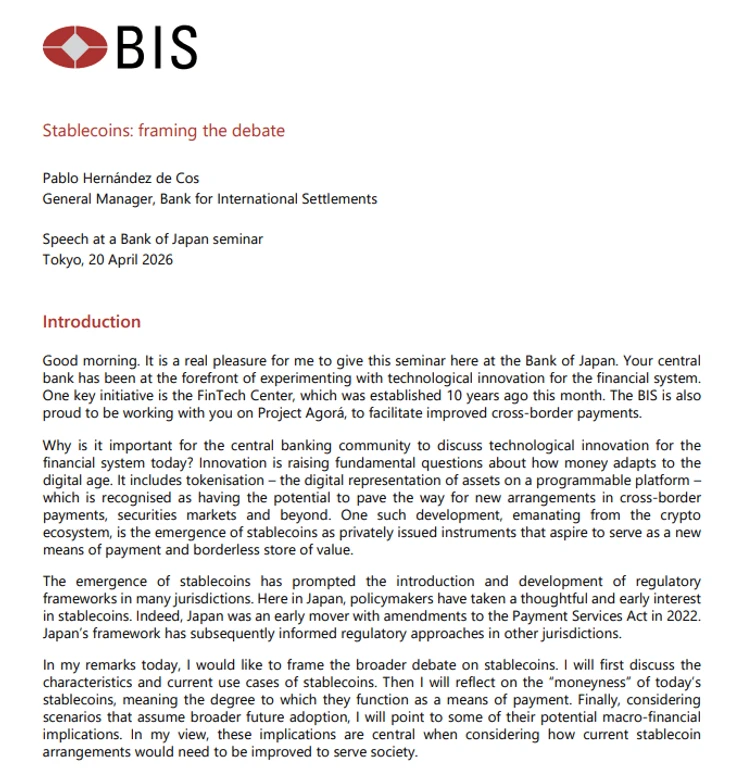
The Bank for International Settlements (BIS) is calling for increased global coordination on stablecoins, citing potential "material consequences" for financial stability and economic policy. BIS General Manager Pablo Hernández de Cos stated that large dollar-denominated stablecoins could rival traditional money if their growth continues unchecked.
De Cos noted that current stablecoin arrangements are insufficient for widespread payment use, despite offering faster cross-border transfers and smart contract integration. He highlighted that major stablecoins like USDT and USDC exhibit characteristics more akin to investment products than cash, evidenced by fees, redemption conditions, and price volatility in secondary markets. These features, he warned, create run and contagion risks, especially as issuers hold reserves in short-term government debt and bank deposits.
These concerns emerge as global policymakers grapple with regulating the rapidly expanding stablecoin market. The use of public, permissionless blockchains and unhosted wallets also raises alarms regarding illicit activities and the challenges in applying Anti-Money Laundering (AML) and Counter-Terrorism Financing (CTF) controls. European policymakers, in particular, are advocating for stricter oversight of non-euro stablecoins, proposing limitations on their use in everyday payments and tighter issuance rules to prevent regulatory arbitrage.