
Wall Street's attitude toward Bitcoin has shifted from euphoric to deeply skeptical, according to Alex Thorn, head of research at Galaxy Digital. Thorn stated that the change stems from exhausted demand, significant selling by long-term holders, and a market struggling for a new narrative, rather than specific bearish catalysts.
Thorn dismissed claims of market manipulation, labeling them as "Twitter cope" and frustration with price action. He argued that Bitcoin's substantial market cap makes it difficult to manipulate.
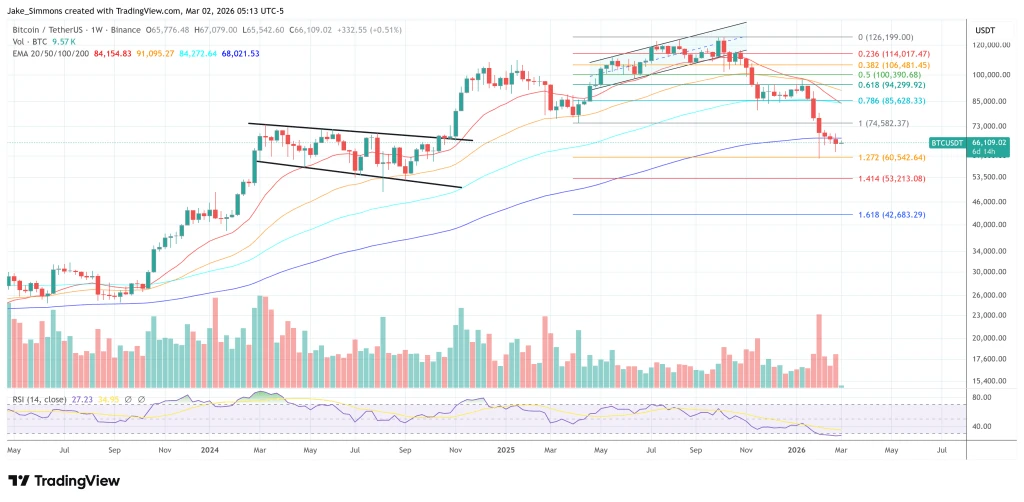
He explained that the popular trade of being long Bitcoin has shifted as capital moved to other sectors like AI-linked equities, semiconductors, energy, quantum stocks, and gold. Concurrently, long-term holders have been distributing coins, a process Thorn described as structural and necessary for market maturation and adoption, leading to a higher realized price.
Thorn acknowledged that sentiment has deteriorated, particularly after Bitcoin failed to consistently perform as "digital gold" since September. He believes Wall Street took this analogy too literally, missing that Bitcoin's features are gold-like, but its trading behavior is still evolving.
Despite current macro fears and investor anxiety surrounding AI, Thorn emphasized focusing on Bitcoin's fundamental purpose and use cases as a store-of-value asset, rather than relying on external factors like Federal Reserve policy. He concluded that the ongoing challenge is convincing investors of Bitcoin's durable value proposition over its status as a short-term macro trade.